
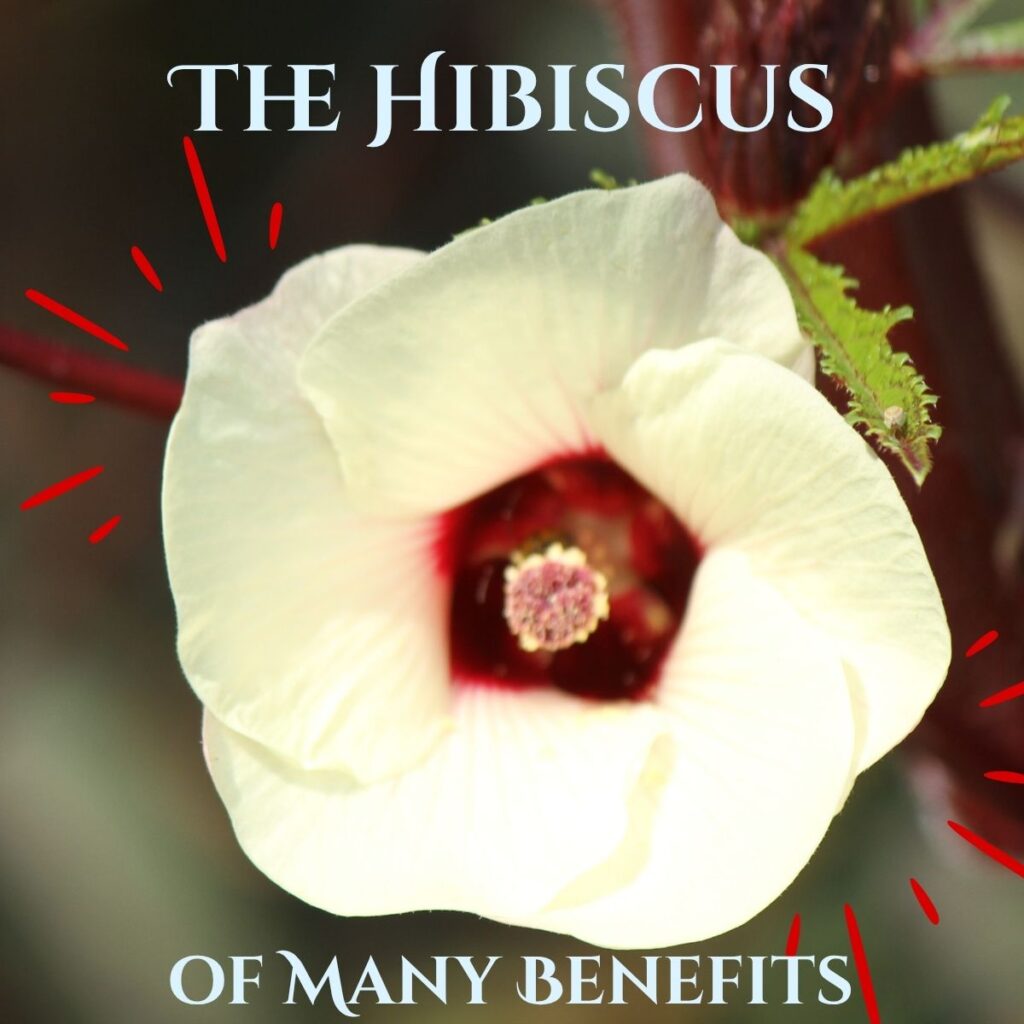
A native of Africa, Jamaica (aka. Roselle; Hibiscus sabdariffa) is a Hibiscus species which produces several useful products traded internationally.
It is a robust shrub with striking red stems and deeply lobed leaves producing showy pale yellow or white flowers with a red spot at the base.
After flowering, a fleshy calyx is produced which enlarges as the fruit matures, and is harvested and used for food coloring, making syrups, and beverages (usually just the dried sepals).
As a cherished symbol of welcome and hospitality, the hibiscus invites us to embrace each new connection with gratitude, reminding us to honor the beauty and generosity inherent in both nature and human relationships.
➡️ The herbal tea made from Jamaica has a flavor that is tart and slightly sweet (but usually also sweetened), and has preliminary evidence for the benefit of high blood pressure, cholesterol, and weight loss. The bitter roots of Jamaica are also used in traditional medicine as a digestive or stomach tonic.
Through scientific investigation, we also know that Jamaica acts as a good antioxidant, being rich in polyphenols, and is used in inflammatory conditions, as well as in hypertension, cancer and lipid metabolism. Other activities found include antihypertensive, antimicrobial, antidiabetic, diuretic, hepatoprotective, hypolipidemic, and anti-inflammatory effects.
The leaves of Jamaica are also consumed in several cuisines as a leafy vegetable, with a flavor like a spicy or sour spinach. The seed may also be roasted and then powdered and used in soups and sauces. The stem is sometimes used in the production of bast fibers, which may be used to make flexible textiles or cordage, such as jute or burlap. It is also widely enjoyed as a garden ornamental with multiple uses!
A recent study demonstrated that regular consumption of hibiscus tea significantly decreased both systolic and diastolic blood pressure in prehypertensive and mildly hypertensive adults.
Other research shows that bioactive anthocyanins and polyphenols from hibiscus extract support hepatic health and exhibit pronounced lipid-lowering and antioxidative activities, supporting traditional claims regarding cardiovascular and metabolic benefits.