
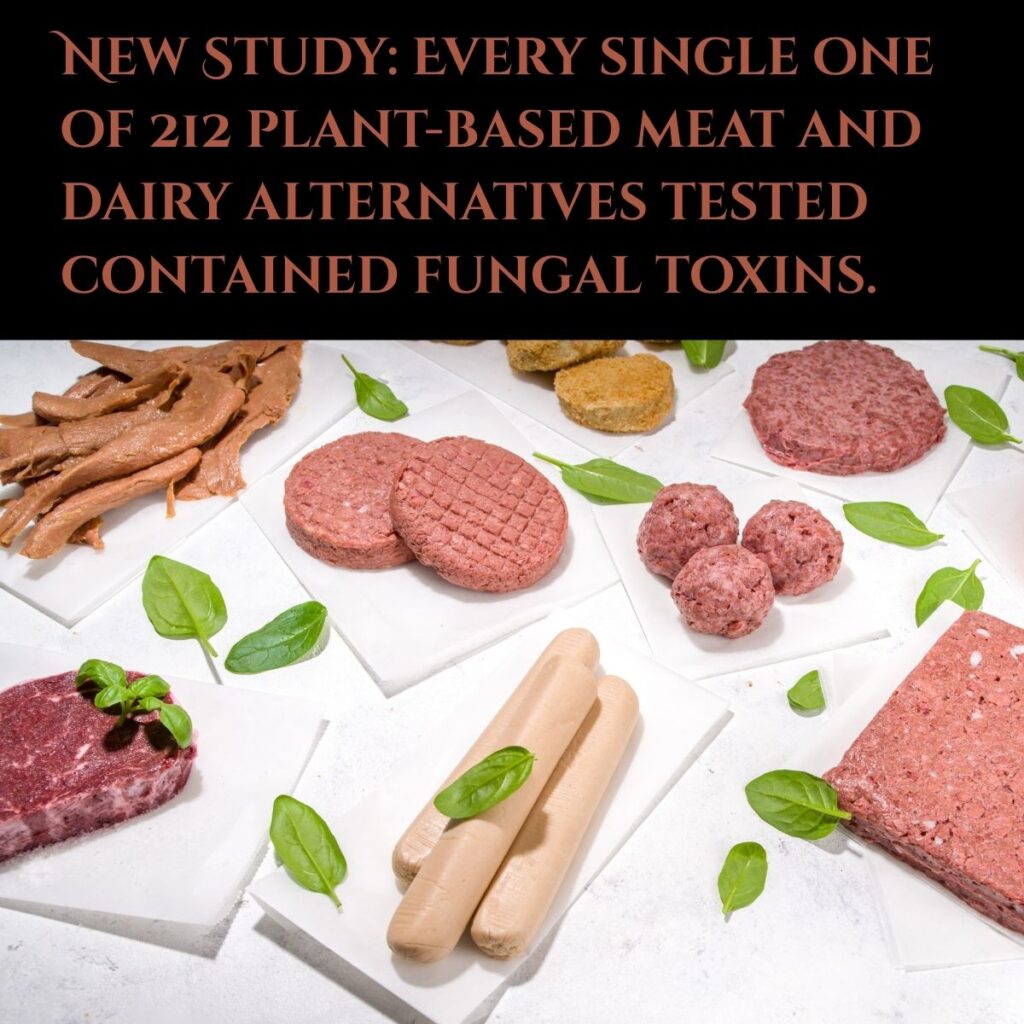
Researchers from the University of Parma, in collaboration with Cranfield University, tested 212 plant-based meat alternatives and plant-based beverages sold in UK stores: burgers, vegetarian chicken pieces, vegan sausages, and oat, almond, and soy milks.
Every product contained at least one of 19 mycotoxins screened for, and some contained several.
This may not be as alarming as the headline sounds: mycotoxins are naturally occurring compounds produced by fungi that can contaminate grains, legumes, and seeds during growing or storage, the base ingredients of most plant-based products.
Despite universal detection, every product tested stayed below EU guideline levels, which researchers attribute to strong UK food industry quality standards.
The bigger question: it’s not about any single product, but cumulative exposure. Small amounts across many products, eaten repeatedly over time on an all-plant diet, could add up in ways that aren’t yet well quantified, and in severe cases, mycotoxin exposure has been linked to liver and kidney damage, immune suppression, and cancer.
Andrea Patriarca, Senior Lecturer in Mycology at Cranfield, notes that mycotoxins can’t be fully avoided in any food system, but new-to-market products like plant-based alternatives currently lack established mycotoxin monitoring regulations, unlike more established food categories.
Reference:
Raquel Torrijos, Octavian Augustin Mihalache, Andrea Patriarca, Angel Medina, Chiara Dall’Asta. Mycotoxin contamination in plant-based beverages and meat alternatives: A survey of the UK market. Food Control, 2026; 183: