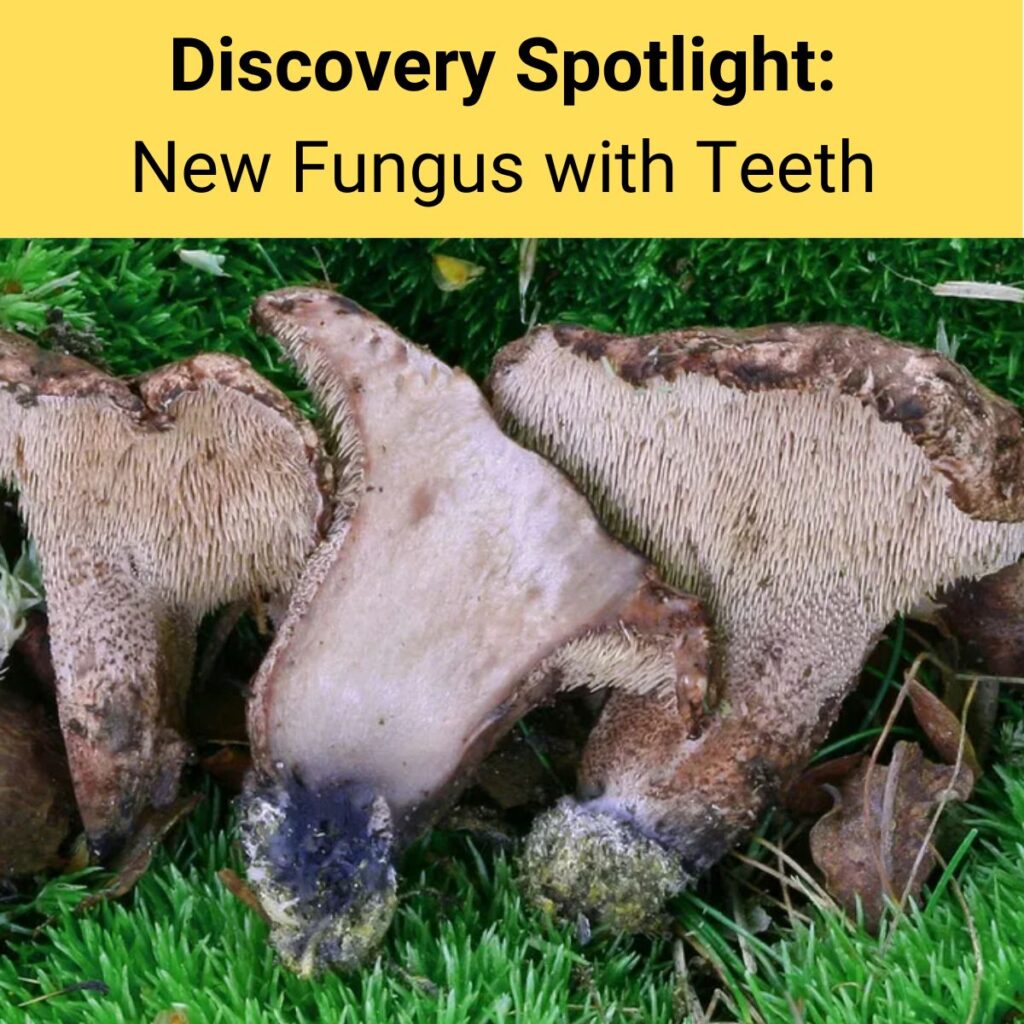
Mycologists at Kew Gardens and collaborators across Europe officially described Hydnellum nemorosum, a rare “tooth fungus” found growing beneath a sweet chestnut tree in Windsor Great Park, UK.
Unlike typical mushrooms with gills, tooth fungi such as H. nemorosum produce their spores on distinctive tooth-like structures under their cap, an adaptation within the world of fungi.
Hydnellum nemorosum thrives in mossy, nutrient-poor soils and lives in mutually beneficial partnership with tree roots, exchanging soil minerals for sugars.
➡️ The rarity and vulnerability of tooth fungi like Hydnellum nemorosum underline the urgent need for conservation: reminding us that fungi too, not only as decomposers but also as critical symbiotic partners in woodland ecosystems, are an irreplaceable part of our planet’s biodiversity.
With only one known site in Britain, it’s already under threat from habitat loss and high soil nitrogen and has been proposed for legal protection and inclusion on the IUCN Red List.
Gratitude to all the field mycologists, conservationists, and researchers whose dedication helps bring these invisible wonders into scientific understanding for future generations.
Reference:
Ainsworth, A.M., et al. (2021). Hydnellum nemorosum—A British tooth fungus described after DNA analysis. Kew Gardens New Species List 2021.
https://lnkd.in/gbvfjYVN
Photo credit: Martyn Ainsworth/RBG Kew.
Discovery Spotlight: New Fungus with Teeth 🦷 🍄