Post Series: Medicinal Flowers
When we think of medicinal plants, it’s often the roots, leaves, or bark that come to mind; yet around the world, flowers have long been used for their healing properties. This series explores some of the most powerful and time-honored blooms used in traditional and modern herbal medicine… as diverse as they are beautiful.
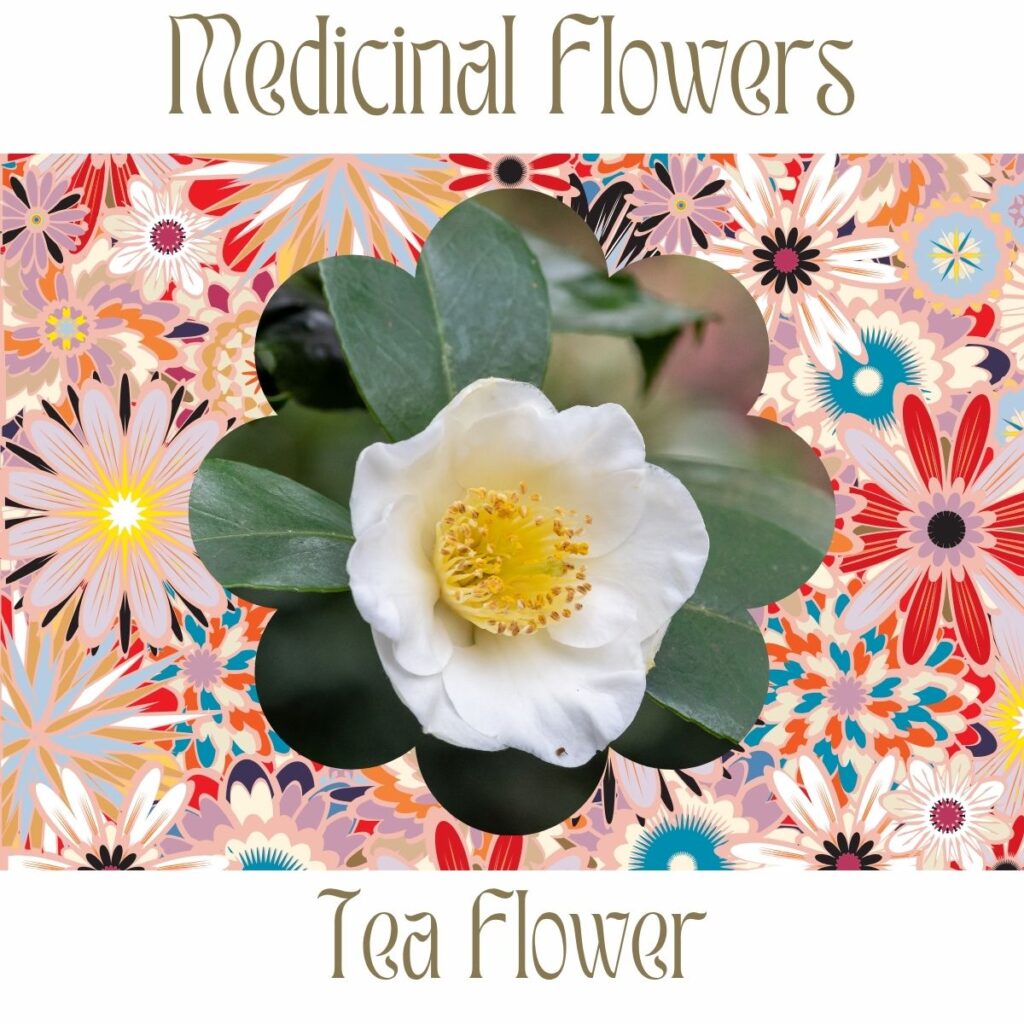
Camellia sinensis flowers are small, fragrant, and white with five to eight rounded petals and prominent yellow stamens, typically blooming in autumn as solitary or clustered blossoms.
· Traditional use: In traditional Chinese medicine, tea flowers have been used to promote urination, reduce fever, calm nerves, and improve digestive health. Decoctions from the flowers are also applied to treat insect bites and skin inflammation, and sometimes prescribed for mild paralysis or insomnia due to their gentle sedative effects. Their occasional use as a stimulant is noted, due to traces of caffeine and related alkaloids.
· Scientific evidence: Pharmacological activities of Camellia sinensis flowers include antioxidant, hypoglycemic, hypolipidemic, anti-cancer, antimicrobial, and gut-modulating actions.
A recent study highlighted that tea flower extracts possess powerful antioxidant and hypoglycemic effects, helping to reduce oxidative stress and regulate blood sugar levels in laboratory models. The research also demonstrated that tea flower polysaccharides promoted beneficial gut microbial populations, supporting digestive health, and modulating inflammatory markers. These results suggest that Camellia sinensis flowers hold promise as a functional ingredient for metabolic and gut health applications.
· Sample reference: Chan, E.W.C. (2024). An overview of the chemical constituents, pharmacological properties, and safety evaluation of Camellia sinensis flowers. Journal of Applied Pharmaceutical Science, 14(05), 022-029.
*This content is for informational and educational purposes only. It is not intended to provide medical advice or to take the place of such advice or treatment from a personal physician.
Tea Flower (Camellia sinensis)-