Native to E. Asia, India, Japan, China, Korea and Vietnam, Mondograss (Ophiopogon japonicus) is a turf-forming perennial with linear grass-like leaves and white-lilac flowers in a raceme followed by blue berries.


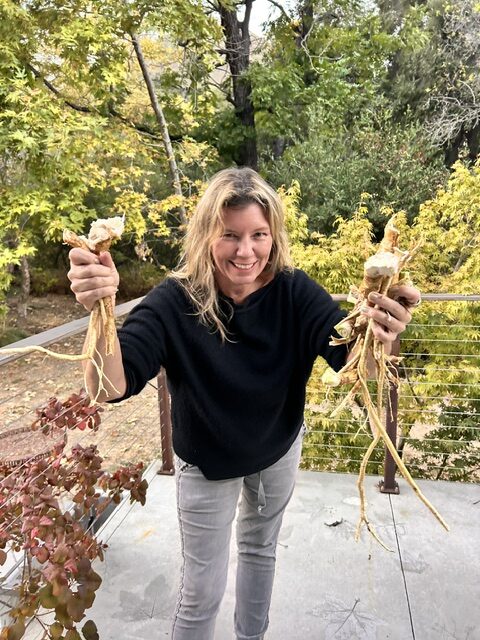
Mondograss spreads with underground tuberous roots so it is often used as a low-maintenance grass substitute or groundcover, and can help prevent erosion as well as tolerate being submerged in water intermittently.
As it is popular as an ornamental plant, several cultivars have been developed with different leaf growth and variegations.
Mondograss has a long history of use in several Asian traditional medicine systems, such as traditional TCM (China) and Kampo (Japan).
➡️ In TCM, Mondograss (Ophiopogonis Radix) is a key yin‑nourishing, fluid‑generating herb that moistens the lung, nourishes the heart and stomach, and eases the mind.
Specifically, it is used for dry cough, fevers, dry constipation, insomnia, anxiety, for the irritated lungs of smokers and for diabetes.
It is also used in topical or personal care preparations for atopic or sensitive skin to support the skin barrier and for its anti-inflammatory properties. It’s root is also used in a nutraceutical way for traditional medicinal soups and tonics to help moisten dryness and support convalescence.
Through scientific investigation, Mondograss has been found to have anti-inflammatory, anticancer, antioxidant, immunomodulating, anti-tussive, antithrombotic, bone protective, anti-aging, anti-NAFLD, antimicrobial and anti-diabetes activities.
In a recent randomized controlled clinical study, a natural active constituent of Mondograss was applied to adult and children with atopic dermatitis and found to significantly reducing the severity of the atopic dermatitis, increase quality of life and reduce the number of patients relapsing compared to placebo.
Ophiopogonin D, a steroidal saponin, has been identified as one of the chief active constituents of the root. In recent in vivo models of myocardial ischemia, ophiopogonin‑ or polysaccharide‑rich fractions from O. japonicus reduced infarct size, improved cardiac function, and attenuated markers such as ST‑segment elevation and serum enzymes (AST, LDH, CK‑MB), while modulating endothelin‑1 and eNOS expression to preserve cardiac tissue integrity.