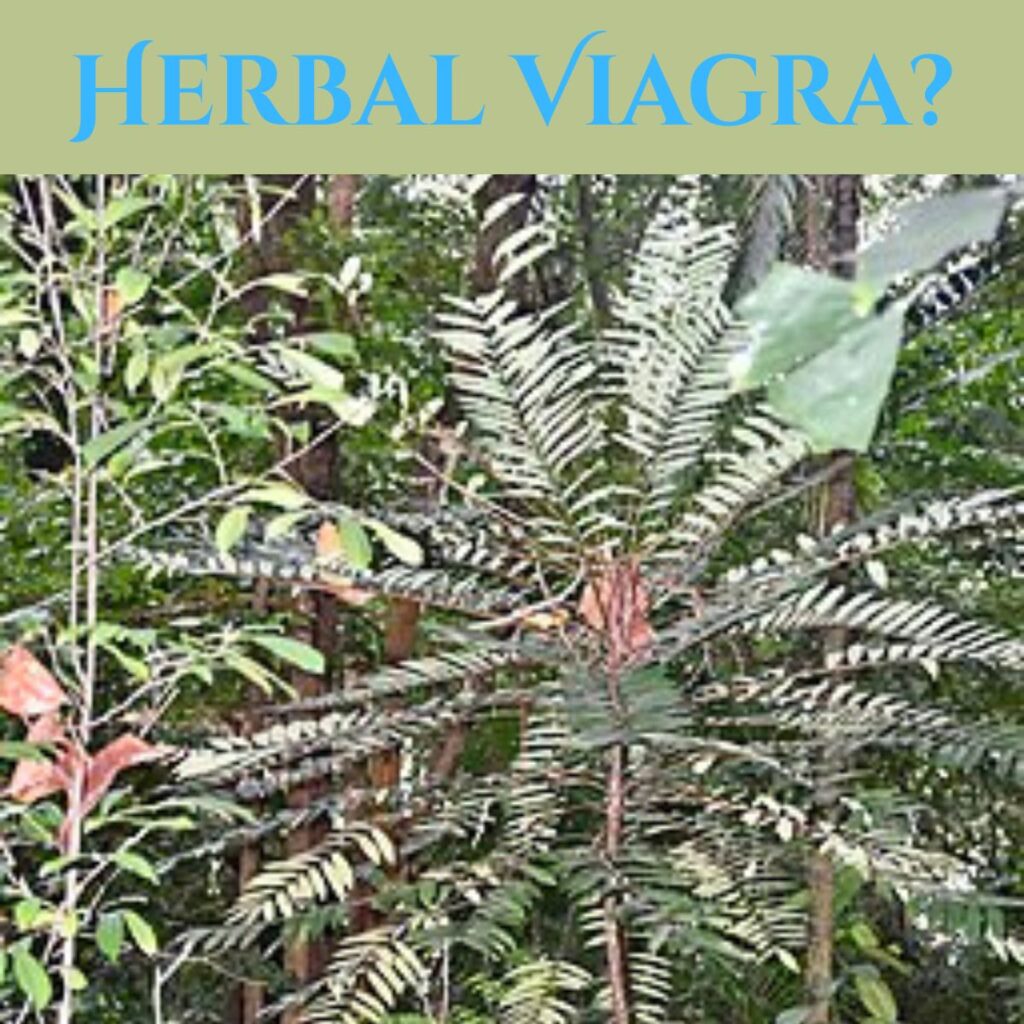
Native to Indochina and the islands of Borneo and Sumatra, Tongkat Ali (Eurycoma longifolia) is an adaptogen that has been focused at men’s sexual health, but is also used for sports performance and slowing down the aging process.
Tongkat Ali is a tall shrub that grows in the understory of forestlands, producing umbrella-like rosettes of compound leaves, large brownish red panicles of fuzzy flowers, and a yellowish-brown drupe afterwards.
➡️ The root is used for traditional medicine and is very bitter. In traditional medicine systems of Malaysia, Indonesia, and Vietnam, decoctions of the root are used as a general “power tonic” for fatigue, age‑related decline, and as a classic aphrodisiac.
The plant is also employed for intermittent fevers and malaria, jaundice, and various infectious and inflammatory conditions, reflecting its role as both a tonic and an antimalarial remedy.
Postpartum, women may be given root preparations to restore strength and support recovery, while other preparations are used for lumbago, indigestion, and generalized aches and pains.
Multiple plant parts are used for different purposes in traditional practice: the roots are most prized and are boiled or extracted as tonics for sexual dysfunction, fatigue, malaria, and “anti‑aging” formulas; the root bark is specifically used for diarrhea and fever; taproots may be used for high blood pressure; the leaves are decocted for topical washes on itchy skin; the fruits are used in remedies for dysentery; and the stem bark can act as a vermifuge for intestinal worms.
Through scientific investigation, Tongkat Ali has been found to exhibit androgen‑modulating, pro‑erectile, antimalarial, anxiolytic, adaptogenic/anti‑stress, anti‑osteoporotic, cytotoxic/anticancer, anti‑inflammatory, antimicrobial, and potential ergogenic activities in preclinical and early clinical research.
One clinical study in older adults (men and women aged roughly 57–72) supplemented 400 mg/day of a standardized Tongkat Ali root extract for five weeks and reported significant increases in total and free testosterone alongside improved muscular strength, suggesting benefits for age‑related hormonal decline and physical performance.
As has been the case with other dietary supplements claiming to improve men’s sexual health, there have been instances where products have been adulterated with prescription drugs, and the FDA has taken action to remove these from the market.
As Tongkat Ali has been increasing in popularity, there have been concerns about it overharvesting and programs have been put in place in some regions to grow the plant commercially at a larger scale.
Herbal Viagra?