
This post series on botanical ingredient adulteration is inspired by the excellent work coming out of the Botanical Adulterants Prevention Program (BAPP) by the American Botanical Council (ABC), continuing today with:
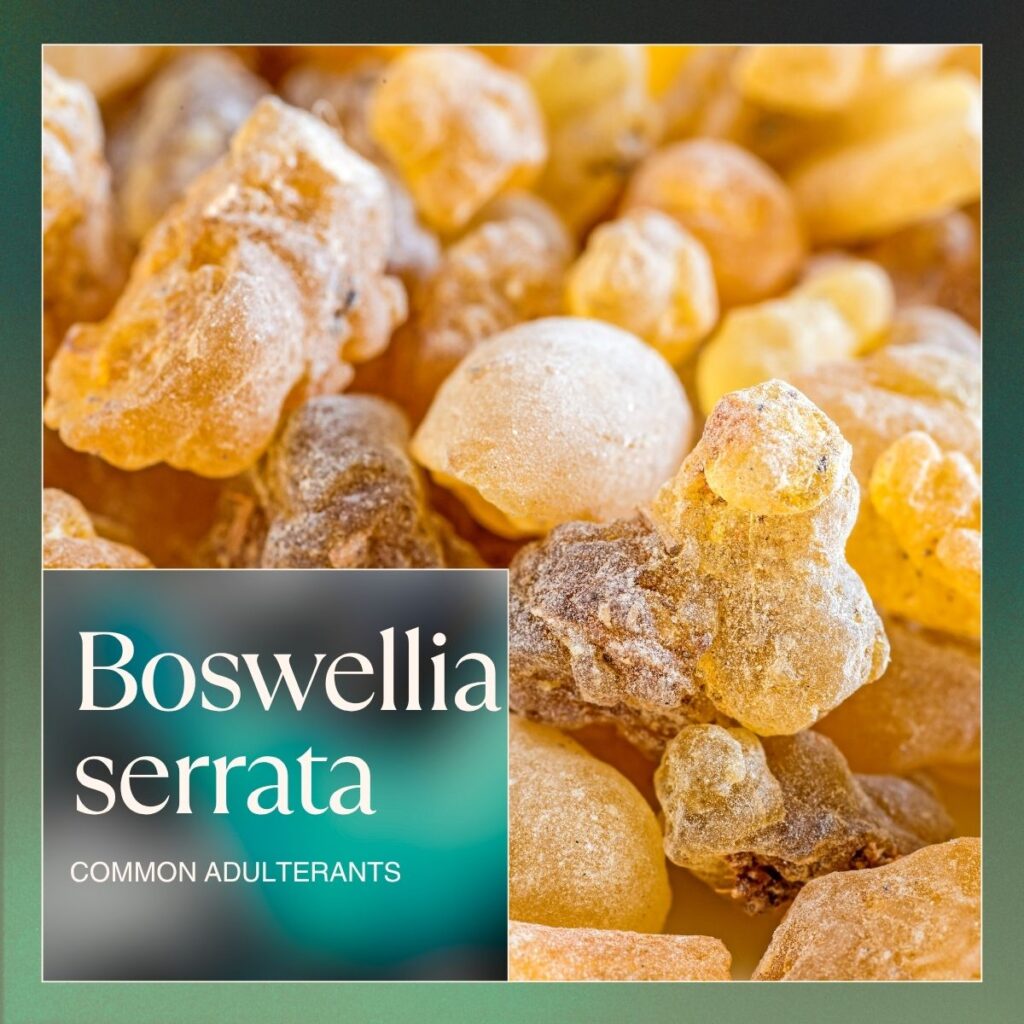
➡️ Boswellia serrata, often called Indian frankincense, is used in chronic conditions involving cytokine balance.
It shows up frequently in joint‑health and mobility formulas, sometimes paired with other botanicals or nutrients, and has been used for joint comfort and for improving function rather than for rapid, drug‑like symptom suppression.
Many traditional systems (Ayurveda, Unani) have used the resin for centuries, and modern use builds on this by standardizing extracts to specific boswellic acid levels to improve consistency of effect.
In the marketplace, people are most likely to encounter Boswellia serrata as standardized dry extracts in capsules or tablets, often labeled with a percentage of boswellic acids (for example, 30–65% total boswellic acids or a specified level of AKBA, the 3‑O‑acetyl‑11‑keto‑β‑boswellic acid fraction).
It is also sold as loose oleogum resin “tears” for traditional uses such as making decoctions, or burning as incense, and appears in topical preparations like creams, gels, and ointments targeted at localized joint or muscle discomfort.
For companies, confirming identity is not optional; it’s a legal and ethical duty under cGMPs to verify that each incoming botanical is the right species, the right plant part, and meets agreed quality specs. Brands and manufacturers should be leaning on resources like the BAPP adulteration bulletins and implementing fit-for-purpose analytical methods, rather than relying on nonspecific tests that can miss plant-part adulteration.
Adulteration, in the regulatory sense, means a product is unsafe or of inferior quality because it fails to meet legal standards for purity, strength, or composition (including contamination).
Economic adulteration is emphasized in these posts: intentional substitution, dilution, or undeclared additions that misrepresent a botanical’s true identity or quality compared to what the label and consumer would reasonably expect. Accidental adulteration is also present in some species.
For more detailed information on adulterants in botanicals, see the BAPP publications, which are freely available on their website. To see this full PDF post, go to LinkedIN: