
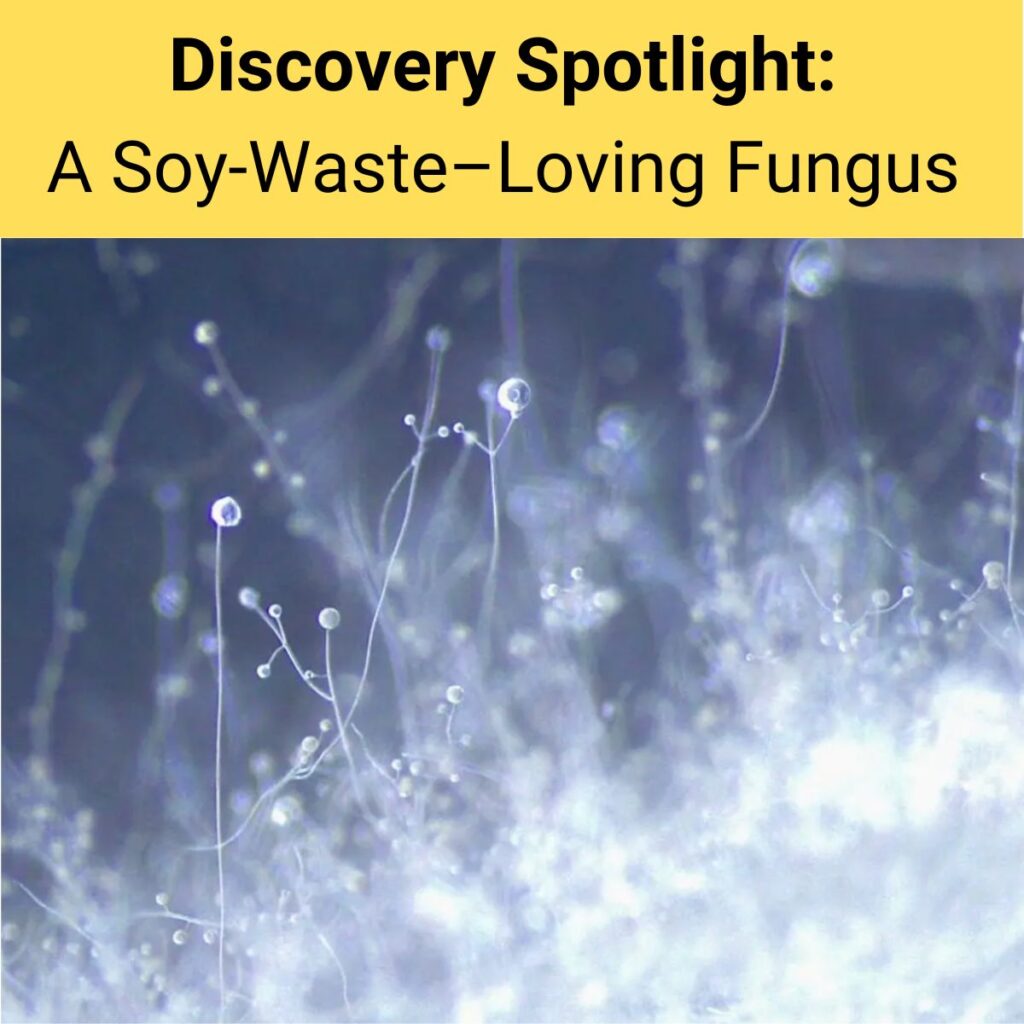
A recently highlighted “soy‑waste–loving” fungus from Korea belongs to a broader group of molds that thrive on soybean by‑products.
These fungi are biologically fascinating because they can break down complex plant polymers and upcycle nutrient‑rich wastes into new biomolecules, enzymes, and flavors, making them attractive candidates for sustainable food innovation and biotechnological use (for example, valorizing soy-processing residues into high‑protein, fermented foods or animal feeds).
At the same time, fungi that colonize soy waste can pose potential risks: some species are capable of producing mycotoxins such as aflatoxins and ochratoxin A, and Korean regulators have had to set specific limits for these contaminants in fermented soy products to protect public health.
This dual nature: promising biotransformation tool on one hand, possible toxin producer on the other
means that every new soy-associated fungus must be carefully assessed for its toxin profile, safety in food applications, and suitability for controlled fermentation, rather than assumed safe simply because it grows on edible substrates.
Reference: Discovery of a New Lichtheimia (Lichtheimiaceae, Mucorales) from Invertebrate Niche and Its Phylogenetic Status and Physiological Characteristics. T Nguyen TT, Monteiro de Azevedo Santiago AL, Kirk PM, Lee HB J Fungi 2023 Mar 3;9(3):317