
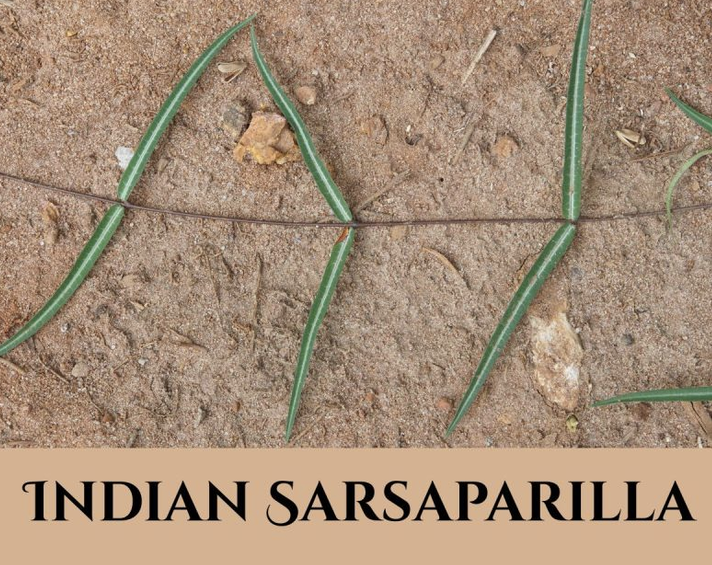
Indian Sarsaparilla (aka. Anantmool; Hemidesmus indicus) is a slender, Indian creeping perennial vine from the Apocynaceae family sending up numerous thin stems from a thick rootstock that is strongly fragrant when dried.
➡️ Indian Sarsaparilla is valued as a flavoring and household plant. The aromatic roots are used to make traditional beverages like nannari sharbat in South India, a cooling syrup added to water or soda, and are also employed to flavor milk, herbal teas, and other drinks, where the pleasant vanilla‑like, slightly spicy aroma doubles as both refreshment and “blood‑cooling” remedy.
Root pieces are sometimes chewed as a breath freshener or infused into confectionery and tonics, and the plant’s essential oils and extracts can be used in low‑grade perfumery, soaps, and cosmetics targeted at “blood purifying” or skin‑clearing benefits.
The vine can act as a living groundcover or climber in home gardens, protecting soil, providing some wildlife habitat, and supplying ready‑to‑harvest medicinal roots when needed, although it is also heavily wild‑harvested, raising sustainability concerns in some regions.
Indian Sarsaparilla has been integrated into Ayurveda, Siddha, and Unani for centuries. The root is considered a rasayana (rejuvenative), blood purifier, and tonic, used for skin diseases, venereal diseases, leprosy, rheumatism, gout, urinary tract infections, respiratory complaints, and general debility. Ayurvedic sources describe it as cooling, demulcent, diaphoretic, diuretic, and alterative, prescribed for conditions like fever, anorexia, menorrhagia, bone loss, low body weight, and stress, as well as for snakebite and scorpion sting in some regional traditions.
Indian Sarsparilla also appears in numerous classical formulations for psoriasis, eczema, “blood heat” skin eruptions, sexually transmitted diseases, and as a supportive herb in cancer and chronic inflammatory disorders.
Through scientific investigation it has been reported to exhibit a wide range of activities, including antioxidant, anti‑inflammatory, antimicrobial, antidiarrheal, antipyretic, analgesic, anticancer/chemopreventive, antidiabetic, hypoglycemic, hepatoprotective, cardioprotective, nephroprotective, neuroprotective, anti‑ulcerogenic, anti‑ophidian (anti‑snake venom), immunomodulatory, wound‑healing, and nootropic activities.
One interesting study involved a topical polyherbal formulation containing a methanolic extract of Indian Sarsparilla root and evaluated its wound‑healing properties in animal models. The formulation significantly accelerated wound contraction, increased tensile strength, and enhanced collagen content and epithelialization compared with controls, and these effects were attributed to a combination of the plant’s antimicrobial and antioxidant actions, which reduced infection and oxidative stress at the wound site.