
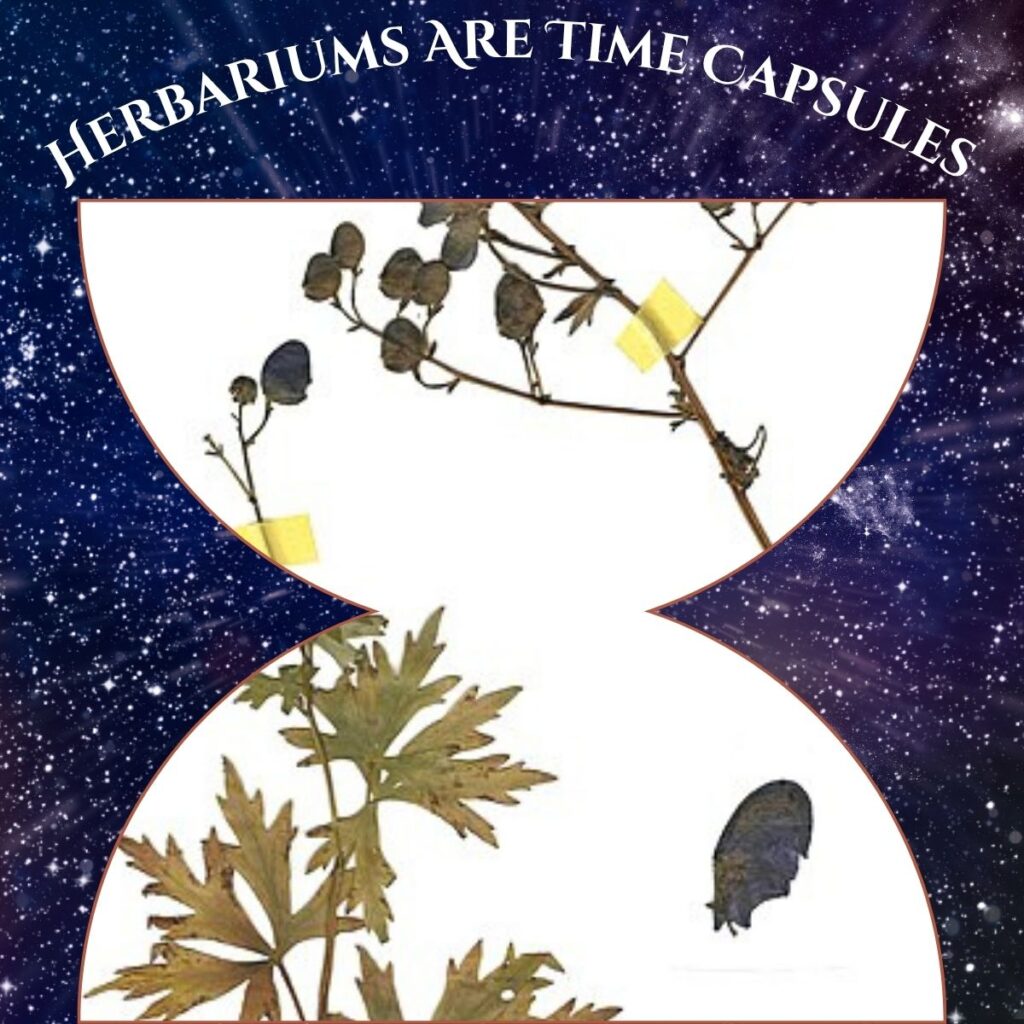
🤔 What happens to a medicinal plant’s chemistry after a century in a herbarium cabinet?
A research team led by Lehman College’s Ed Kennelly analyzed 100‑year‑old medicinal plant specimens preserved at the New York Botanical Garden’s Steere Herbarium.
Using modern analytical chemistry, they still detected many well-known bioactive compounds: including in specimens from the highly toxic, pharmacologically important Aconitum genus, better known as monkshood.
➡️ That finding gives the herbarium another perspective: These collections are not only records of taxonomy, geography, and genetics; they are repositories of historical chemical diversity. They may allow us to compare plant chemistry across decades, climates, growing regions, and cultural uses in ways that fresh samples alone cannot.
✨ For ethnobotany, this is a beautiful convergence: it makes it more clear folk knowledge, historic specimens, and high‑resolution chemical analysis can now speak to one another across a hundred years.
Reference: Kennelly, E. J., et al. (2026). UPLC-qToF-MSE metabolomics to investigate century-old botanicals: A case study of medicinal aconite.ACS Omega.