
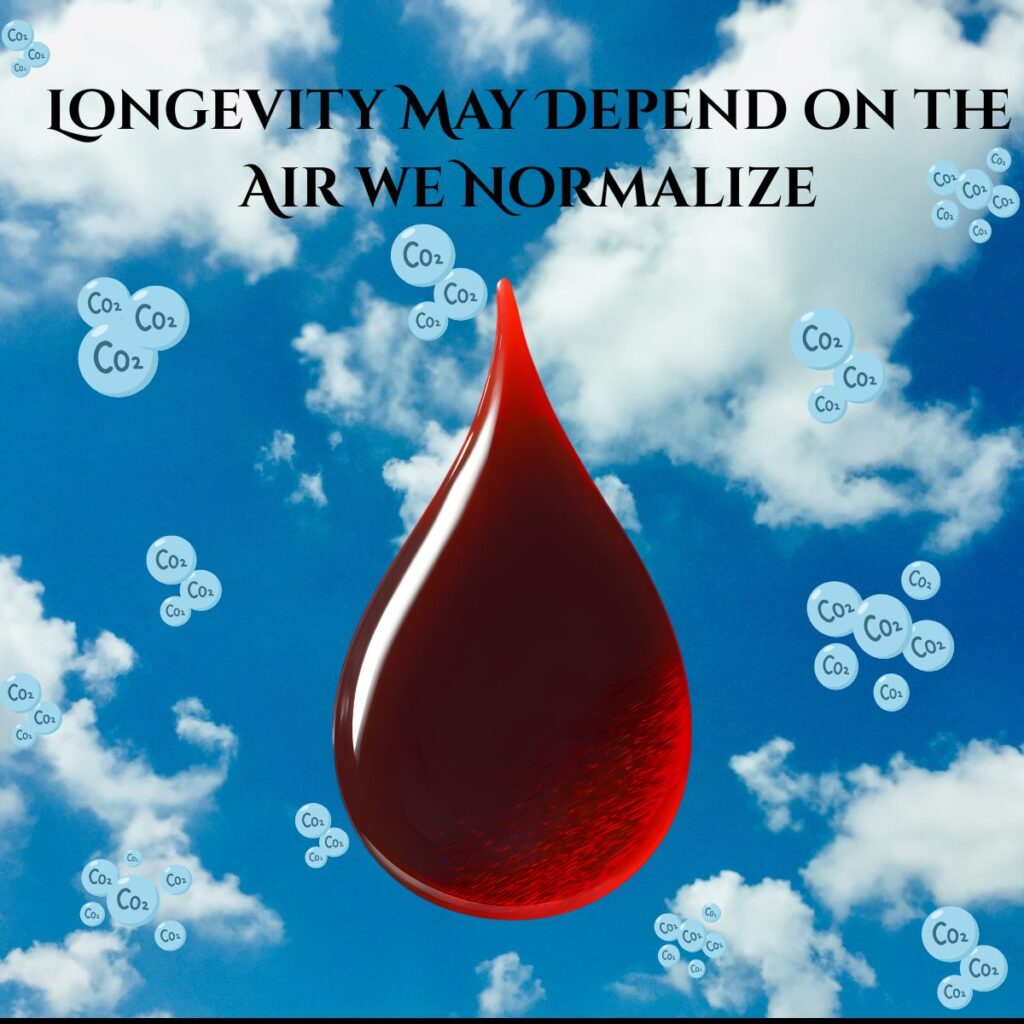
A new population-level analysis raises an intimate question of what rising CO₂ does to our blood chemistry.
⬆️ Researchers analyzing more than 20 years of U.S. NHANES blood data (roughly 7,000 people measured at two-year intervals from 1999 to 2020) found that average serum bicarbonate rose about 7% as atmospheric CO₂ increased from roughly 369 ppm to above 420 ppm.
⬇️ Over the same period, average calcium and phosphorus levels declined.
We usually talk about rising CO₂ as a climate problem: heat, fires, crop stress, ocean acidification.
However, this new research suggests bicarbonate could approach today’s upper healthy boundary within about 50 years if trends persist.
The study does not prove that outdoor CO₂ caused these blood changes. But the parallel trends are enough to justify closer monitoring…especially because bicarbonate helps regulate acid–base balance, while calcium and phosphorus matter to bone and cellular health.
That is a longevity perspective worth considering: What we do to the planet, we do to ourselves.
Healthspan is not shaped only by diet, exercise, sleep, and genetics. It is also shaped by the baseline conditions of the world we breathe in, continuously, across an entire lifetime.
Reference: Alexander N. Larcombe, Phil N. Bierwirth. Carbon dioxide overload, detected in human blood, suggests a potentially toxic atmosphere within 50 years. Air Quality, Atmosphere, 2026; 19 (3)