
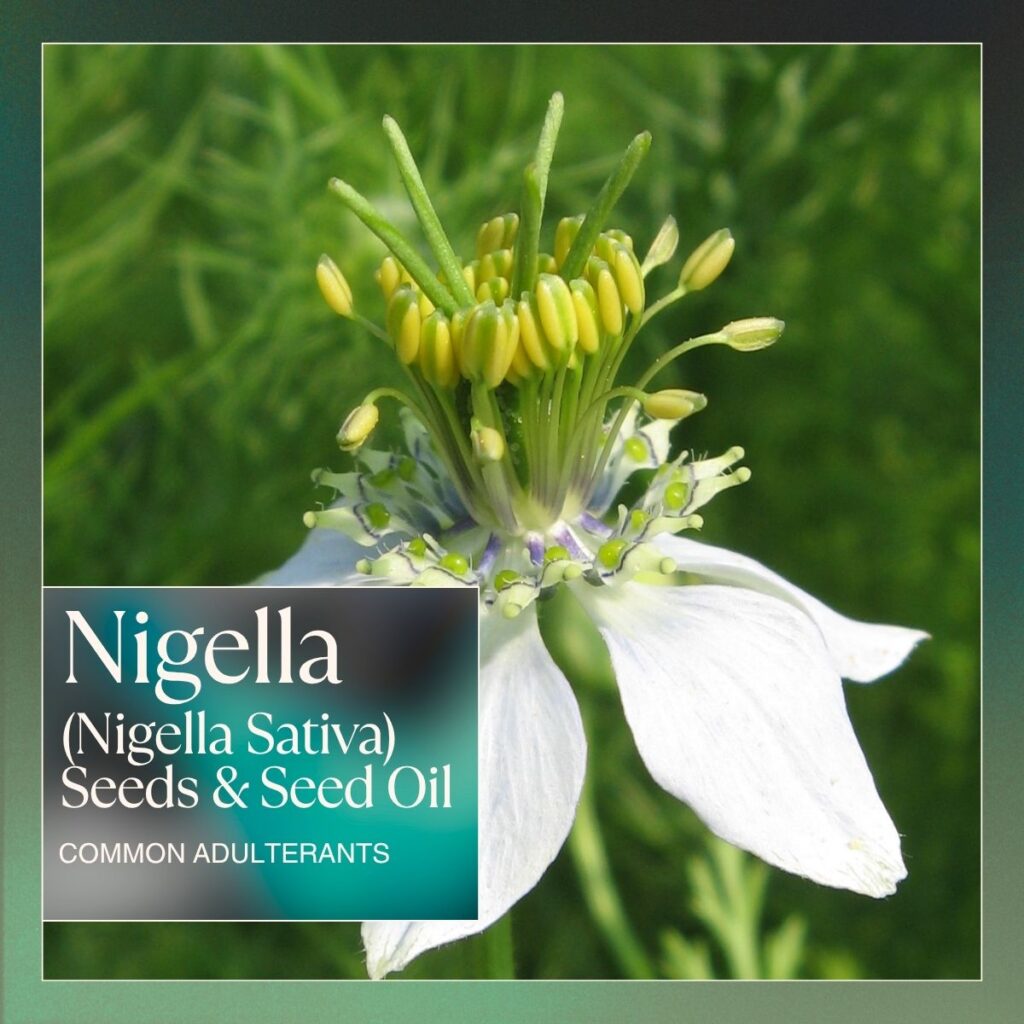
This post series on botanical ingredient adulteration is inspired by the excellent work coming out of the Botanical Adulterants Prevention Program (BAPP) by the American Botanical Council (ABC), continuing today with:
➡️ Nigella sativa, commonly called Nigella or black seed, is an aromatic seed used both as a culinary spice and in several traditional medical systems. In Middle Eastern and Asian cooking, the whole seeds are commonly sprinkled on bread and used in a variety of recipes. Beyond its traditional uses, Nigella sativa has become popular targeting inflammatory processes. Its key constituents include fatty acids and the volatile-oil component thymoquinone.
Consumers can find N. sativa as whole seed, ground seed, and fixed seed oil, often called black seed oil The fixed oil is sold in bottles, capsules, softgels, and gummies, while seed-based products can also appear in teas, honey blends, cough syrups, and a variety of topical applications.
Adulteration, in the regulatory sense, means a product is unsafe or of inferior quality because it fails to meet legal standards for purity, strength, or composition (including contamination).
Economic adulteration is emphasized in these posts: intentional substitution, dilution, or undeclared additions that misrepresent a botanical’s true identity or quality compared to what the label and consumer would reasonably expect. Accidental adulteration is also present in some species.
To see the full PDF Post, go to it at LinkedIN: https://lnkd.in/p/gg5zHe2E