
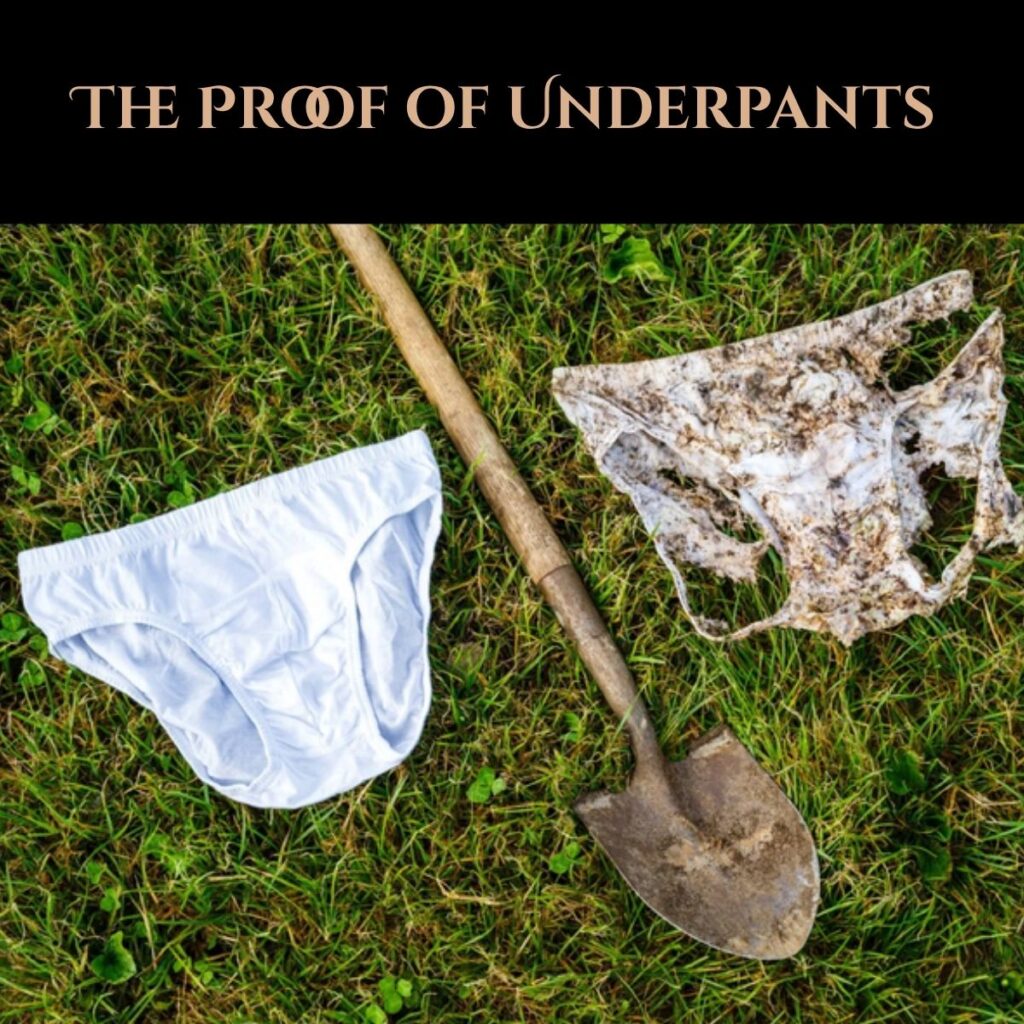
It’s hard to get people interested in soil health…
So, the “Proof by Underpants” (Beweisstück Unterhose) project, run by the University of Zurich and Agroscope since 2021, asked over 1,000 Swiss citizen scientists to bury cotton underwear and tea bags at roughly 1,000 sites across the country.
Two months later, volunteers dug everything up, photographed it, and sent samples to the lab along with soil for analysis.
The logic: cotton is decomposed by soil organisms, so the faster it breaks down, the more biologically active the soil underneath is. It’s a low-cost, visual, publicly engaging proxy for something usually invisible: soil life.
What they found:
🌹Private gardens showed the fastest decomposition and the highest organic matter, creating ideal conditions for earthworms, fungi, and bacteria.
🌾 Lawns had the lowest biological activity of any land use type studied.
🚜 Agricultural fields and meadows fell in between.
➡️ Land use type (garden vs. lawn vs. field vs. meadow) was a stronger predictor of decomposition than most soil chemical properties measured, though nutrient levels also mattered significantly.
Practical takeaways: keeping soil covered, applying compost, diversifying crop rotations, and cutting back on mineral fertilizers and pesticides all support healthier soil biology.
The team is now proposing an “underwear index” as a simple public-facing tool for communicating soil health.
And in a nice touch, around 240 citizen scientists are listed as co-authors on the published paper in Plants, People, Planet.
Reference:
Bender, SF et al. Soil health assessment using buried cotton underpants with the help of 1000 citizen scientists. PLANTS, PEOPLE, PLANET, 2026