
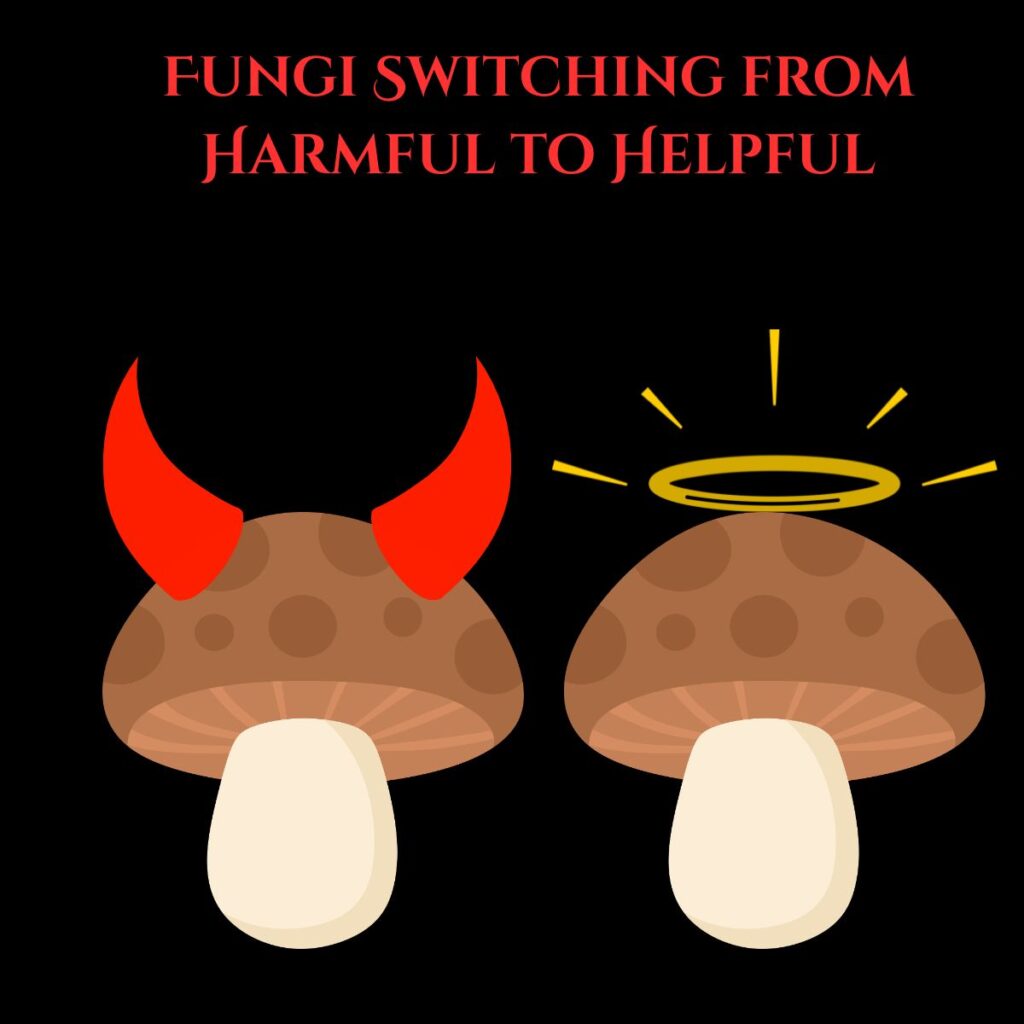
When is a plant-associated fungus helpful…and when does it become harmful?
New research on Colletotrichum tofieldiae suggests the answer may lie in gene expression and environmental context.
Researchers found that activation of a single fungal secondary-metabolism gene cluster was linked to a shift from supporting plant growth under phosphorus limitation to suppressing nutrient uptake and causing disease-like effects.
When that cluster was disrupted, or conditions changed, the harmful strain became beneficial, promoting root growth.
This serves as an example where “pathogen” and “mutualist” are not always fixed categories.
Understanding these transitions could help agriculture better harness the beneficial potential already present in soil microbial diversity.
Reference: Hiruma et al. A fungal sesquiterpene biosynthesis gene cluster critical for mutualist-pathogen transition in Colletotrichum tofieldiae. Nature Communications, 2023; 14 (1)