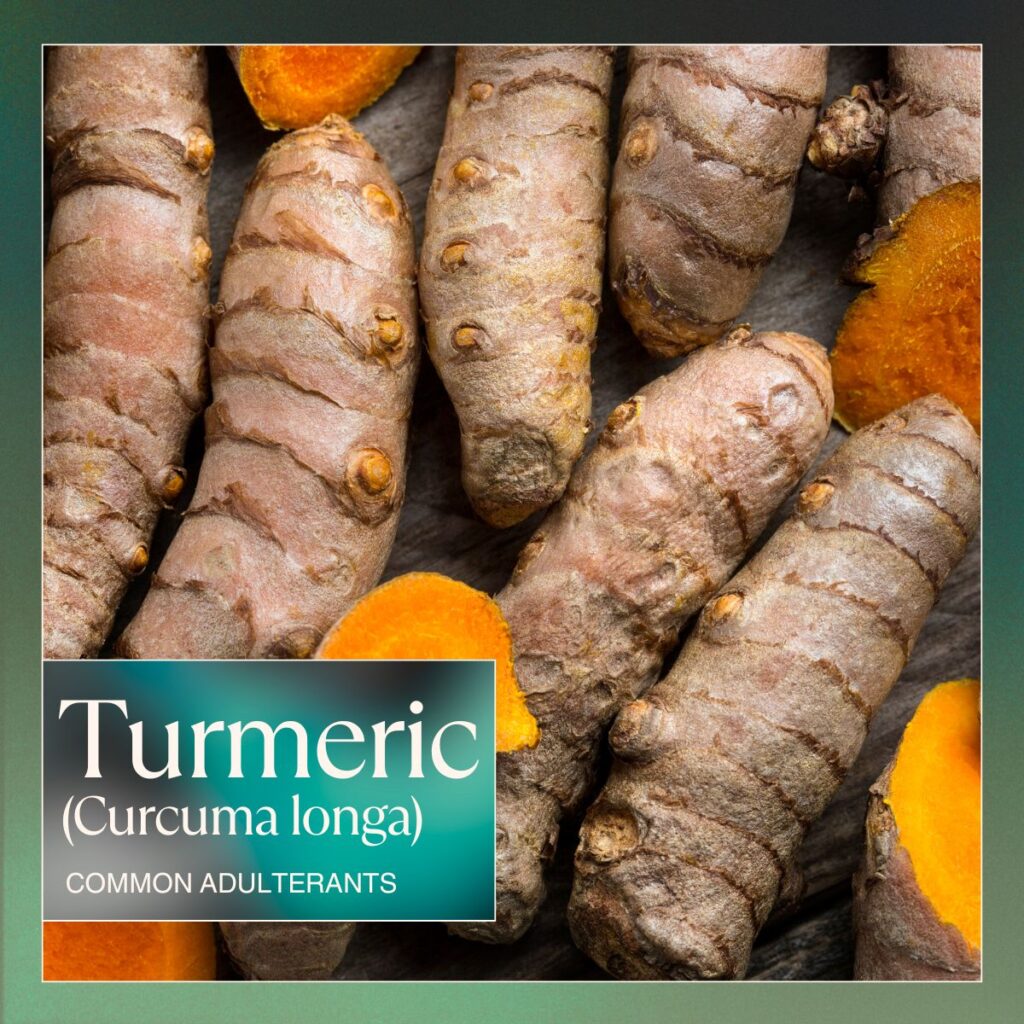
This post series on botanical ingredient adulteration is inspired by the excellent work coming out of the Botanical Adulterants Prevention Program (BAPP) by the American Botanical Council (ABC), continuing today with:
➡️ Turmeric (Curcuma longa), a rhizome best known as a spice and natural colorant. It is a key ingredient in curry powders and spice blends, and in herbal medicine, turmeric is used extensively in Ayurveda, Siddha, and Unani, and in East Asian systems including traditional Chinese medicine and Japanese Kampo. Recognized uses include support of indigestion and joint health, antioxidant support, and stimulating bile flow. Recent pharmacological studies have explored roles in cardiovascular and liver health, metabolic syndrome, skin disease, and and others.
On the market, turmeric is sold as fresh root, dried whole or powdered rhizome, herbal tea, oleoresin, dry extract, and tincture made with 70% ethanol. Dietary supplements often contain curcumin-rich extracts, usually standardized to 95% curcuminoids. These extracts may include carriers, and some products add piperine or soy lecithin to improve the absorption of curcuminoids.
For companies, confirming identity is not optional; it’s a legal and ethical duty under cGMPs to verify that each incoming botanical is the right species, the right plant part, and meets agreed quality specs. Brands and manufacturers should be leaning on resources like the BAPP adulteration bulletins and implementing fit-for-purpose analytical methods, rather than relying on nonspecific tests that can miss plant-part adulteration.
Adulteration, in the regulatory sense, means a product is unsafe or of inferior quality because it fails to meet legal standards for purity, strength, or composition (including contamination).
Economic adulteration is emphasized in these posts: intentional substitution, dilution, or undeclared additions that misrepresent a botanical’s true identity or quality compared to what the label and consumer would reasonably expect. Accidental adulteration is also present in some species.
For more detailed information on adulterants in botanicals, see the BAPP publications, which are freely available on their website. To see the full post, go here:
Turmeric Common Adulterants-