
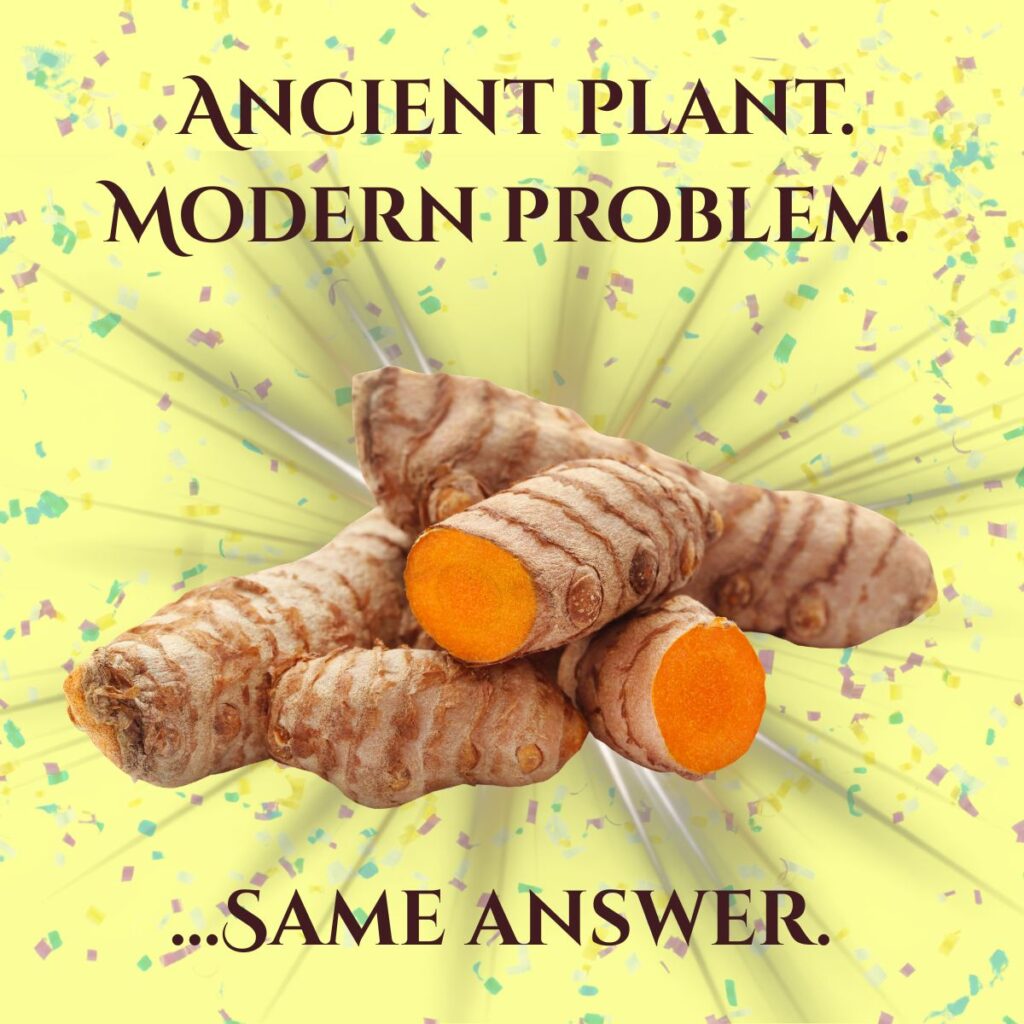
If you’re looking for the botanical with the broadest preclinical evidence against microplastic and nanoplastic damage…it’s still curcumin.
I know. Not the most exciting answer.
But a 2025 PubMed review examined studies on curcumin’s protective effects across every major organ system affected by microplastic/nanoplastic exposure:
Liver. Kidney. Reproductive tissue. Thyroid. Neural tissue.
The finding: curcumin restored oxidative and histopathological damage to near-normal in essentially every study reviewed.
The dual mechanism is key:
→ Nrf2/ARE activation → antioxidant enzyme upregulation
→ NF-κB suppression → anti-inflammatory signaling
It’s not glamorous. It’s not a new discovery. But as the microplastics research space is finding, curcumin keeps showing up as the answer across tissue types, exposure models, and damage endpoints.
The Ethnobotanist in me notes: Curcuma longa has been a cornerstone of Ayurvedic and Southeast Asian traditional medicine for centuries, we’re only now articulating why at the molecular level. And plants keep coming to our rescue through the ages.
Reference: Protective effect of curcumin against microplastic and nanoplastics toxicity Mashayekhi-Sardoo et al. Int J Environ Health Res 2025 May;35(5):1314-1353.