Post Series: Medicinal Flowers
When we think of medicinal plants, it’s often the roots, leaves, or bark that come to mind; yet around the world, flowers have long been used for their healing properties. This series explores some of the most powerful and time-honored blooms used in traditional and modern herbal medicine… as diverse as they are beautiful.
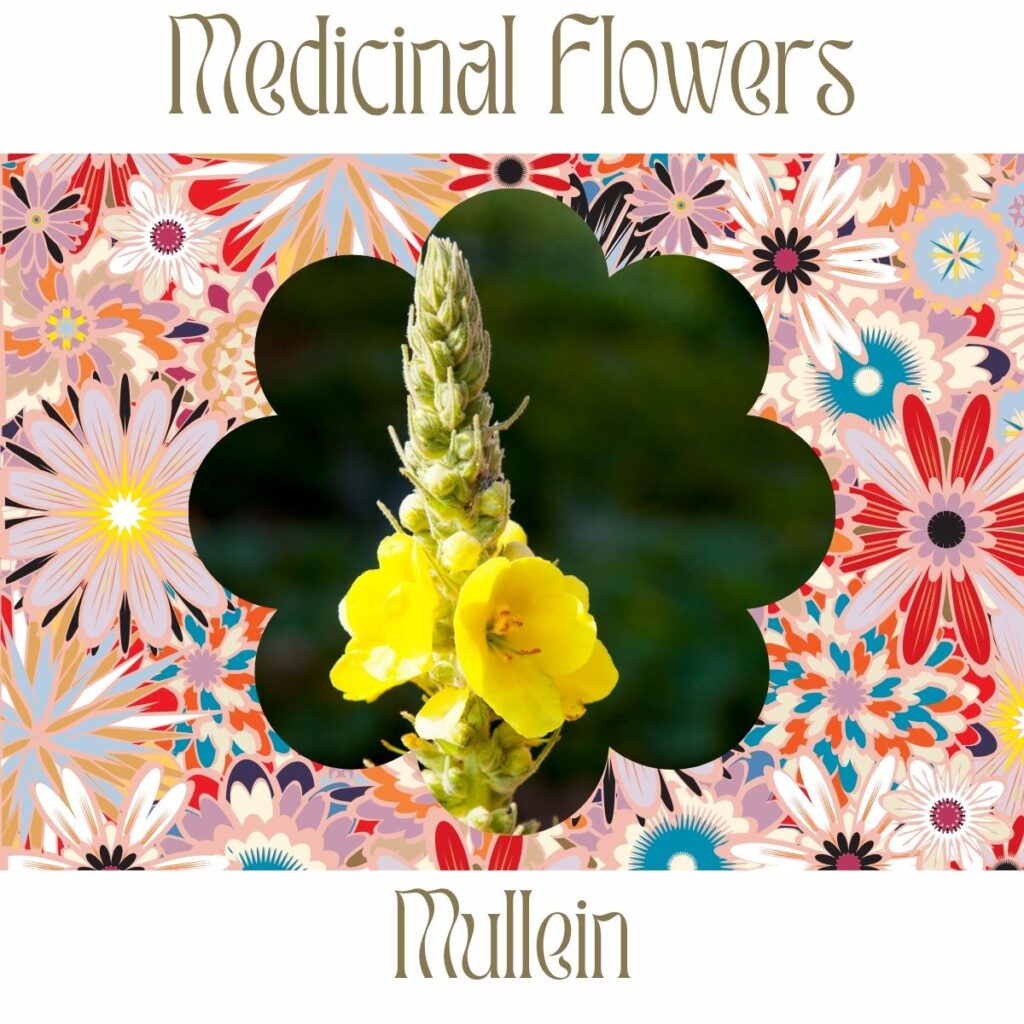
The flowers of Verbascum thapsus, or common Mullein, are small, five-lobed, and bright yellow, densely arranged on a tall, spike-like inflorescence that can reach impressive heights atop velvety, silver-green foliage.
· Traditional use: In traditional medicine, mullein flowers have long been used to make teas, tinctures, or infusions for soothing coughs, bronchitis, asthma, and other respiratory issues.
➡️The flowers are also infused in oils to create topical remedies for earaches and skin inflammation, and have been used in folk protocols to alleviate hemorrhoids and diarrhea. Indigenous groups and European herbalists alike have prized the demulcent, expectorant, and mild analgesic actions of mullein flowers.
The flowers also yield yellow dyes and have been used to flavor herbal teas.
· Scientific evidence: Known pharmacological activities of Mullein include antioxidant, antiviral, analgesic, sedative, anti-inflammatory, antimicrobial, and anticancer effects.
· Sample reference: Gai S, Wang Z, Zhang R. Health-promoting and disease-mitigating potential of Verbascum thapsus L. Phytomedicine Plus. 2022 Jun;2(2):100232.
Mullein Flowers (Verbascum thapsus)-