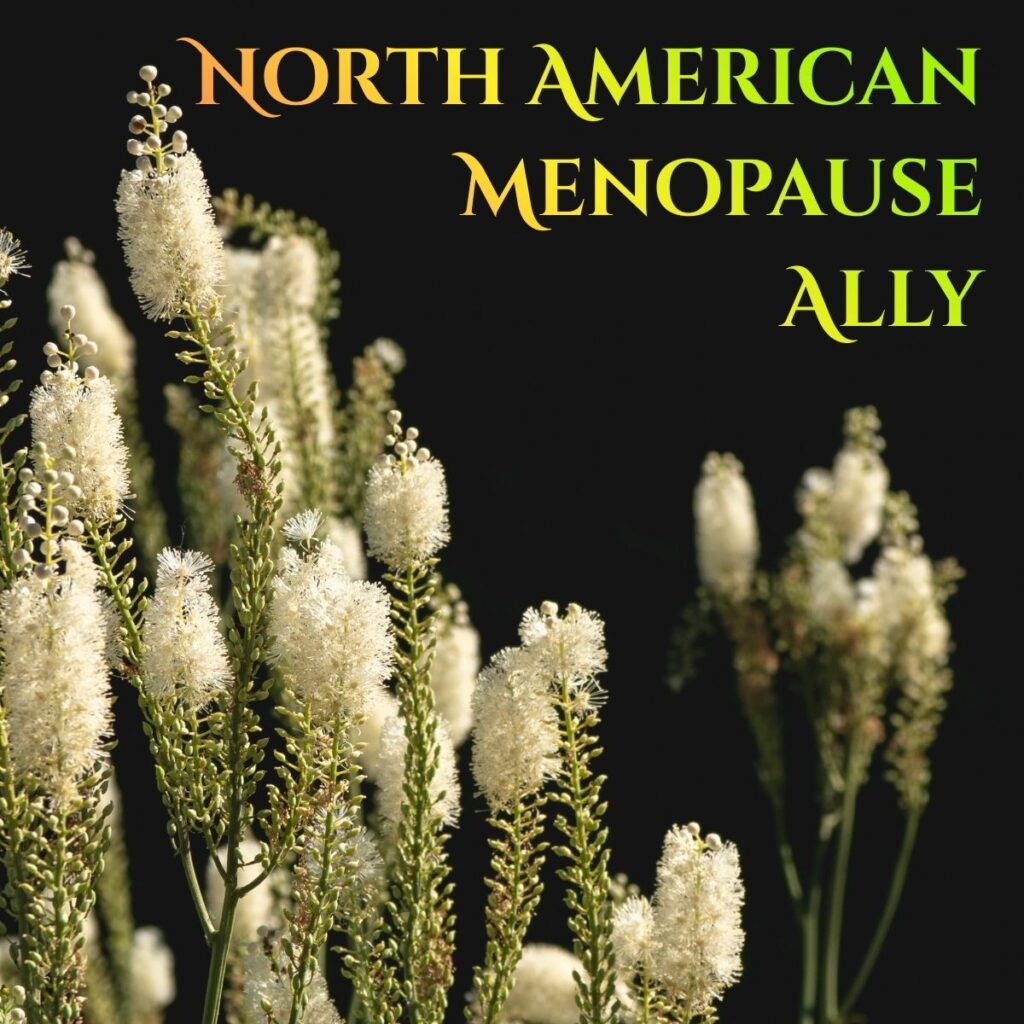
An herbaceous perennial native to North America, Black Cohosh (Actaea racemosa, syn. Cimicifuga racemosa) has a rhizomous root system that produces basal compound leaves and sending up stems several feet tall with racemes of fluffy-looking flowers with long stamens and a white stigma.
After flowering, seeds develop along the stems and dry in an attractive manner, adding interest to the garden for several weeks.
Purple-leaved cultivars have been developed which give Black Cohosh more ornamental interest in the garden. Folklorically, it has also been used as a kind of ‘bugbane’ or insect-repellent plant around the home and garden.
Native American traditional medicine employed the rhizome for rheumatic and musculoskeletal pain, fever, and as a remedy for snakebite and various gynecologic complaints. It subsequently became a prominent “female tonic” in 19th‑ and 20th‑century Eclectic and naturopathic practice, used for dysmenorrhea, irregular menses, and symptoms associated with menopause.
➡️ There are several clinical studies which confirm that Black Cohosh reduces the symptoms of Menopause; however, as studies have been on various kinds and sometimes unspecified preparations, the studies as a whole have given mixed result.
There have been rare case reports of liver toxicity in people taking products labeled as black cohosh; although causality is debated and confounded by issues such as adulteration and product quality.
In either case, Black Cohosh remains one of the most popular alternative and complimentary approaches to reducing Menopausal symptoms world-wide.
One randomized, placebo‑controlled clinical trial in peri‑ and postmenopausal women used a standardized black cohosh extract and found significant improvements in menopausal symptom scales, particularly reductions in hot flashes and sweating, compared with placebo, without evidence of endometrial proliferation on ultrasound.
Another compared black cohosh–based therapy with conventional hormone therapy and observed comparable improvements in vasomotor symptoms and overall menopausal quality‑of‑life scores in some cohorts, suggesting that standardized black cohosh extracts may offer an option for women who cannot or choose not to use conventional estrogen-based hormone therapy, although some tissue‑selective and receptor‑modulating effects have been observed in preclinical studies.
North American Menopause Ally