
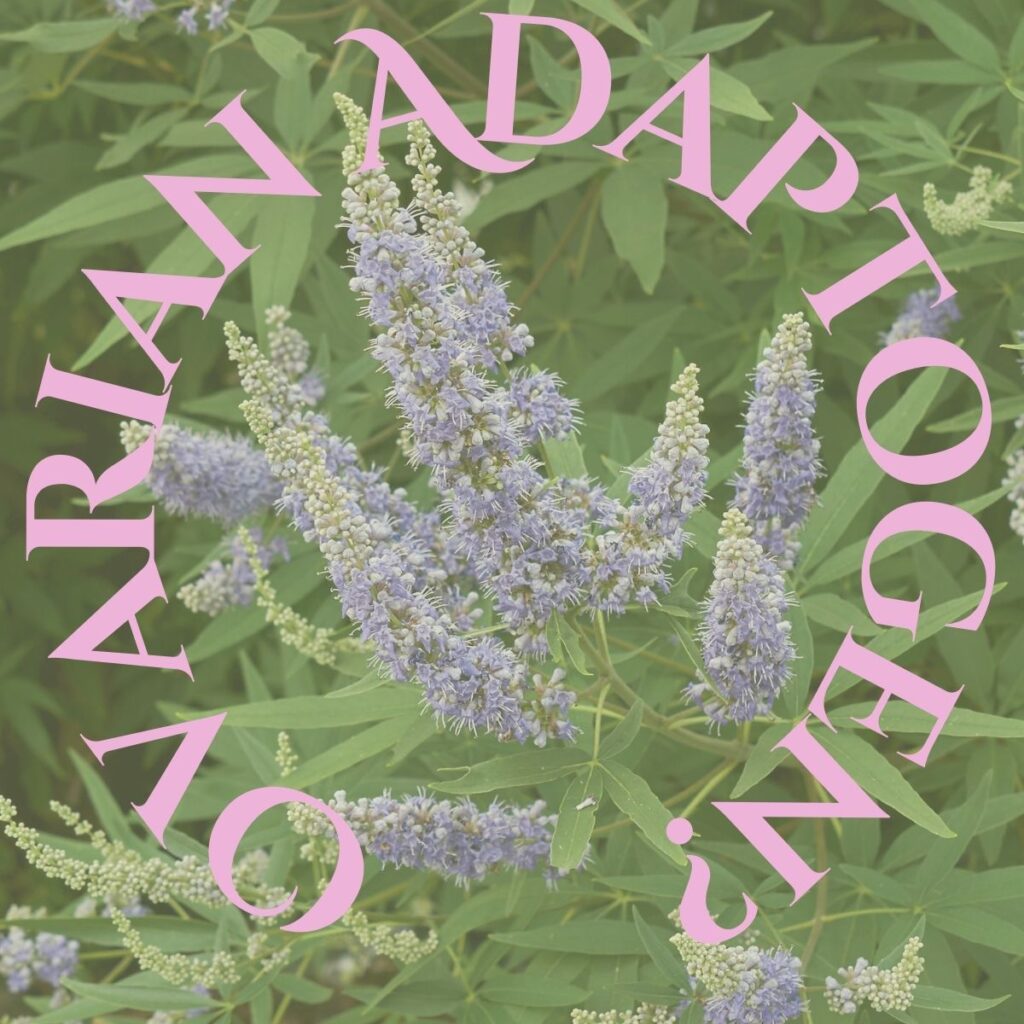
Vitex (aka. Chaste tree, Chasteberry; Vitex agnus-castus) is a deciduous shrub or small tree native to the Mediterranean region and parts of western Asia with aromatic, palmately divided leaves and showy spikes of lilac to violet flowers. It produces small, peppercorn-like berries that are harvested as the main medicinal part of the plant.
Vitex is also valued as an ornamental landscape shrub or small tree, used for summer color, pollinator support, and fragrance. The wood is hard and fine-grained and has been used on a small scale for walking sticks, wattle, and other light utility items, while the flexible branches have been woven into baskets and hurdles in some Mediterranean regions. The pungent berries have historically been used as a pepper substitute (“monk’s pepper”) and added in small amounts to food for their spicy, aromatic character, blurring the line between culinary and medicinal use. Beekeepers sometimes plant chaste tree near apiaries because its abundant summer flowers provide forage for bees and contribute to aromatic honey.
➡️ In traditional medicine, especially in European and folk traditions, Vitex fruit has been used to “regulate” the menstrual cycle, reduce premenstrual breast tenderness, and modulate mood and fluid retention around menses.
It was historically associated with promoting chastity or dampening sexual desire, particularly among monks, though this reputation is more cultural than evidence-based. In contemporary phytotherapy, it is used primarily for premenstrual syndrome (PMS), premenstrual dysphoric disorder (PMDD), cyclic mastalgia, and other conditions thought to involve relative hyperprolactinemia or luteal phase insufficiency. Among modern functional medicine practitioners, it is often thought of as a sort of ‘ovarian adaptogen’, useful in many life stages.
Through scientific investigation, Vitex has been found to exhibit dopaminergic (D2-agonist–like) prolactin-lowering effects, modulation of gonadotropins (LH and FSH), possible progesterone-supporting effects, mild phytoestrogenic and antiandrogenic actions, anti-inflammatory and antioxidant properties, and putative anxiolytic and mastalgia-relieving activities.
One randomized, double-blind, placebo-controlled trial in women with PMS found that daily chasteberry extract over several cycles significantly reduced symptoms such as irritability, mood swings, breast tenderness, and headache compared with placebo, supporting its role in menstrual symptom management.