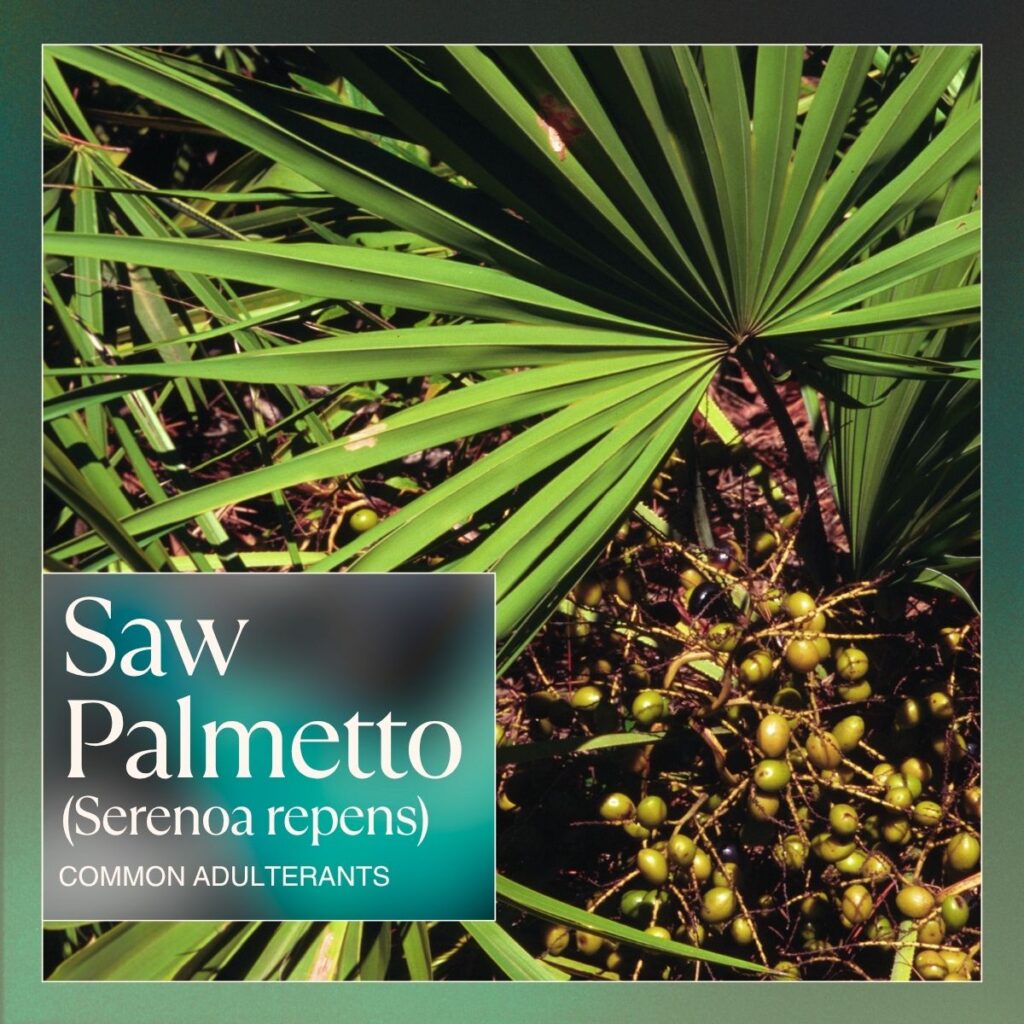
This post series on botanical ingredient adulteration is inspired by the excellent work coming out of the Botanical Adulterants Prevention Program (BAPP) by the American Botanical Council (ABC), continuing today with:
➡️ Saw palmetto (Serenoa repens), a palm native to the southeastern United States whose berries are used in herbal preparations marketed for prostate health and urinary symptoms associated with benign prostatic hyperplasia (BPH). Its lipid-rich fruit extracts contain free fatty acids, phytosterols, and fatty alcohols, and research discussed in the BAPP bulletin has investigated their ability to inhibit 5-alpha-reductase, an enzyme involved in converting testosterone to dihydrotestosterone.
On the market, saw palmetto is available as dried whole or cut berries, powdered berries, and concentrated lipid extracts, commonly incorporated into capsules and softgels. Some softgel products also contain declared vegetable oils as formulation ingredients, making it important to distinguish the amount of saw palmetto extract from the total capsule contents.
For companies, confirming identity is not optional; it’s a legal and ethical duty under cGMPs to verify that each incoming botanical is the right species, the right plant part, and meets agreed quality specs. Brands and manufacturers should be leaning on resources like the BAPP adulteration bulletins and implementing fit-for-purpose analytical methods, rather than relying on nonspecific tests that can miss plant-part adulteration.
Adulteration, in the regulatory sense, means a product is unsafe or of inferior quality because it fails to meet legal standards for purity, strength, or composition (including contamination).
Economic adulteration is emphasized in these posts: intentional substitution, dilution, or undeclared additions that misrepresent a botanical’s true identity or quality compared to what the label and consumer would reasonably expect. Accidental adulteration is also present in some species.
For more detailed information on adulterants in botanicals, see the BAPP publications, which are freely available on their website. To view the full downloadable PDF post, go to:
Saw Palmetto Common Adulterants-