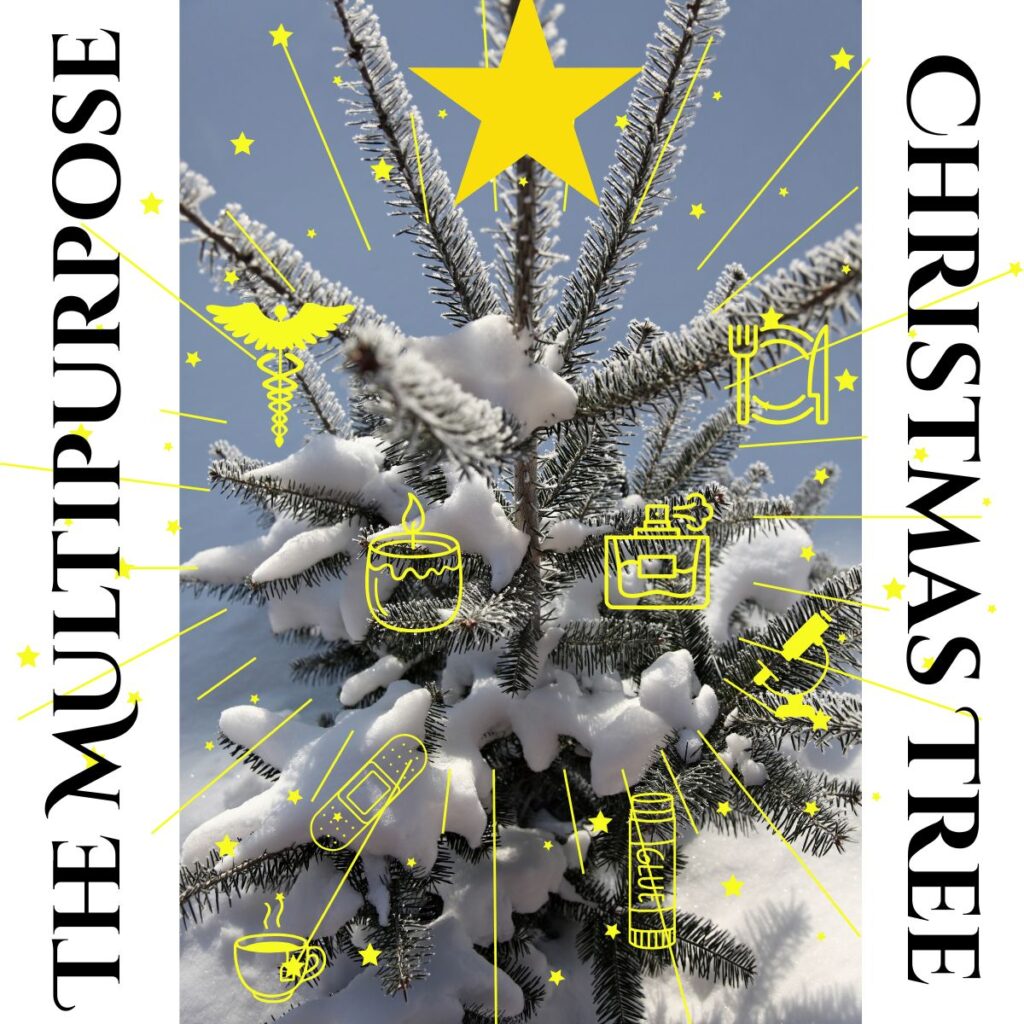
The Balsam Fir (Abies balsamea) is a native to Canada and the US, popular for its characteristic conical shape and “Christmas tree” fragrance.
Balsam Fir also makes a wonderful ornamental tree, very hardy at least down to -4 degrees Farenheit, reaching up to about 60 feet tall, but also available in small dwarf sizes.
When cut for use as a Christmas Tree, they have a great firm conical great shape and also retain their needles for a long time.
The Balsam Fir has been used as a source of resin which has medicinal, industrial, food flavoring and fragrance/ perfumery uses and is considered GRAS in the USA as a flavoring.
When the Balsam Fir is cut, it is so resinous that the resin often sprays out of the wood cut.
This resin, which can be harvested from blisters in the bark is delicious and chewy if used raw.
It can also be dried, ground into a powder and then used as a thickener for foods such as soups or breads.
The oleoresin is used as a food flavoring in sweet foods, baked goods, frozen desserts and beverages.
The young green leaf tips are also high in vitamin C and make a good tea substitute.
The resin also has a long history of use medicinally. When used directly as a topical, it can act like a band aid that has natural antiseptic and wound healing properties.
Numerous First Nations used the resin externally as a protective, antiseptic dressing for cuts, burns, sores, insect bites, and other skin injuries. Needles and inner bark were prepared as infusions or decoctions for coughs, colds, fevers, chest and pulmonary complaints, rheumatism, and digestive issues, and as post-partum or sweat-bath remedies.
In some traditions the gum and other parts were also used for tuberculosis, menstrual irregularities, and even cancers, reflecting its standing as a broad panacea within boreal ethnomedicine
Through scientific investigation, it has been found to exhibit antibacterial, antifungal, antiviral, anti-inflammatory, antioxidant, analgesic, respiratory expectorant, antidiabetic, and possible antitumor and immunomodulatory effects.
Other uses of the resin include for waterproofing the seams of canoes, in the manufacture of glues, incense, as a caulking, candles, a cement for microscopes and slides (it has a high refractive index like glass), a fixative in perfumery, and a glue for glasses.
The boughs used to be a favorite for forming matresses for camping long before there were easy to use foam mats available…truly a multiuse tree!
The Multipurpose Christmas Tree 🎄 ✨