Post Series: Medicinal Flowers
When we think of medicinal plants, it’s often the roots, leaves, or bark that come to mind—yet around the world, flowers have long been used for their healing properties. This series explores some of the most powerful and time-honored blooms used in traditional and modern herbal medicine… as diverse as they are beautiful.
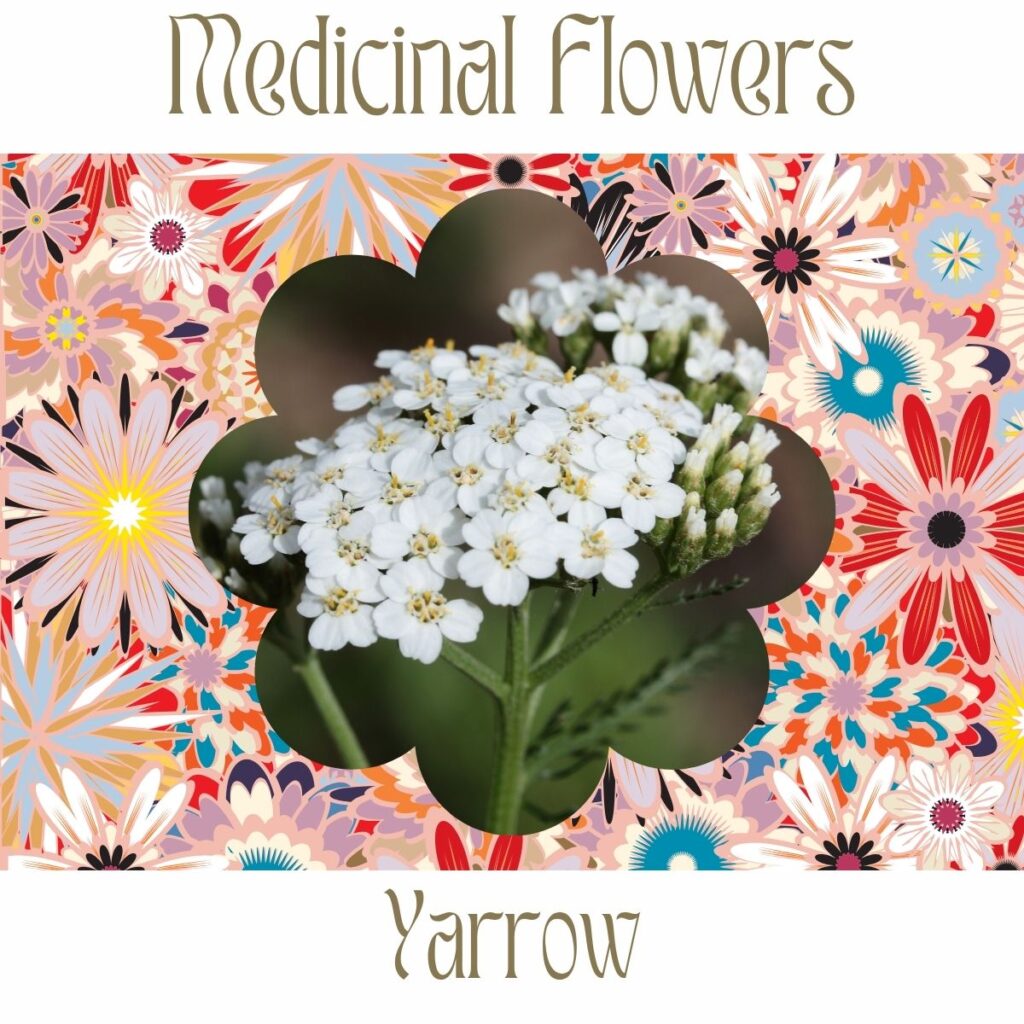
Yarrow (Achillea millefolium) flowers are highly valued in herbal medicine for their astringent, anti-inflammatory, and wound-healing properties, as well as their ability to support digestive health and ease fevers. The flowers are typically white, pink or yellow and are produced in dense, flat-topped clusters on an aromatic, fern-like perennial that thrives in temperate regions.
Yarrow is native to temperate regions of Europe, Asia, and North America, where it often grows wild in meadows, grasslands, and along roadsides.Origin: Native to Europe and western Asia.
· Traditional use: The flowers have been used for centuries to staunch bleeding, heal wounds, alleviate fevers, and aid digestion.
· Scientific evidence: Research has confirmed that yarrow flower extracts possess anti-inflammatory, antimicrobial, antioxidant, antispasmodic, and gastroprotective properties, supporting its traditional use for wounds, fevers, and digestive complaints.
· Sample reference: Phenolic Compounds in Flowers and Herb of Achillea millefolium L.: Histochemical and Phytochemical Studies. Konarska A, Weryszko-Chmielewska E, Materska M, Sulborska-Różycka A, Dmitruk M, Chilczuk B. Molecules. 2025 May 7;30(9):2084.
*This content is for informational and educational purposes only. It is not intended to provide medical advice or to take the place of such advice or treatment from a personal physician.
Yarrow (Achillea millefolium)-