
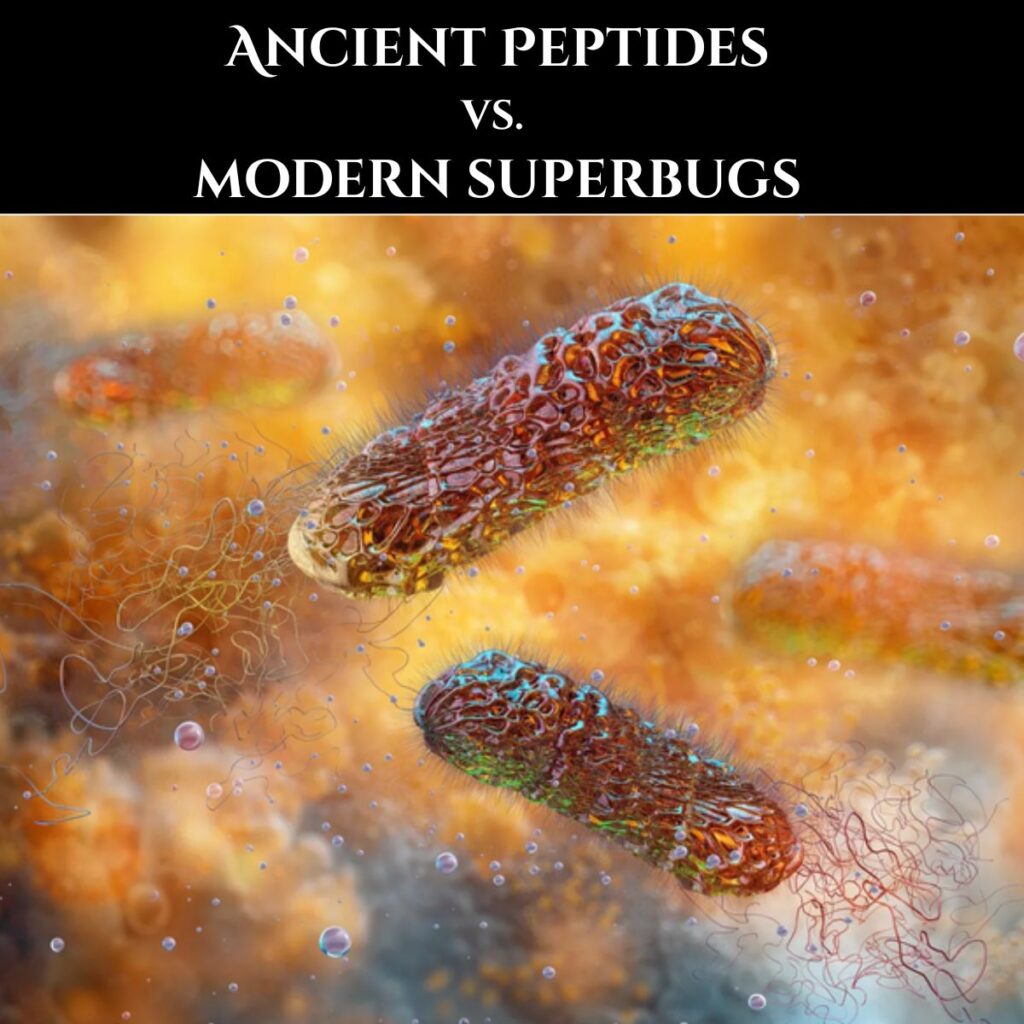
Evolution has been running experiments for about 160 million years & Researchers at the University of Oregon just reopened some of the old lab notebooks.
The team studied lactoferrin, an immune protein found in milk, tears, saliva and mucus. It starves bacteria by holding on to iron, and part of it can punch holes in bacterial membranes.
Using ancestral sequence reconstruction, they worked out likely versions of its antimicrobial peptide going back to the earliest placental mammals. Then they made those peptides in the lab.
What they found:
🔹 The oldest versions damaged bacterial membranes, but the bacteria repaired themselves and survived.
🔹 Versions from more recent ancestors worked progressively better. Some beat the modern human peptide against pathogens like Staph aureus, E. coli and Pseudomonas.
🔹 In some cases, much of the extra potency came down to a single amino-acid change.
The authors are careful about limits: These peptides break down quickly in the body and aren’t close to becoming medicines. The value is in the design clues, including how bacteria develop resistance and how combination treatments might get ahead of that.
Reference:
Titas Sil, Caitlin H. Kowalski, Sierra Scamfer, Natalie Copeland, Matthew F. Barber. Retracing the origin and evolution of a cryptic antimicrobial peptide within mammalian lactoferrin. PLOS Biology, 2026; 24 (8)