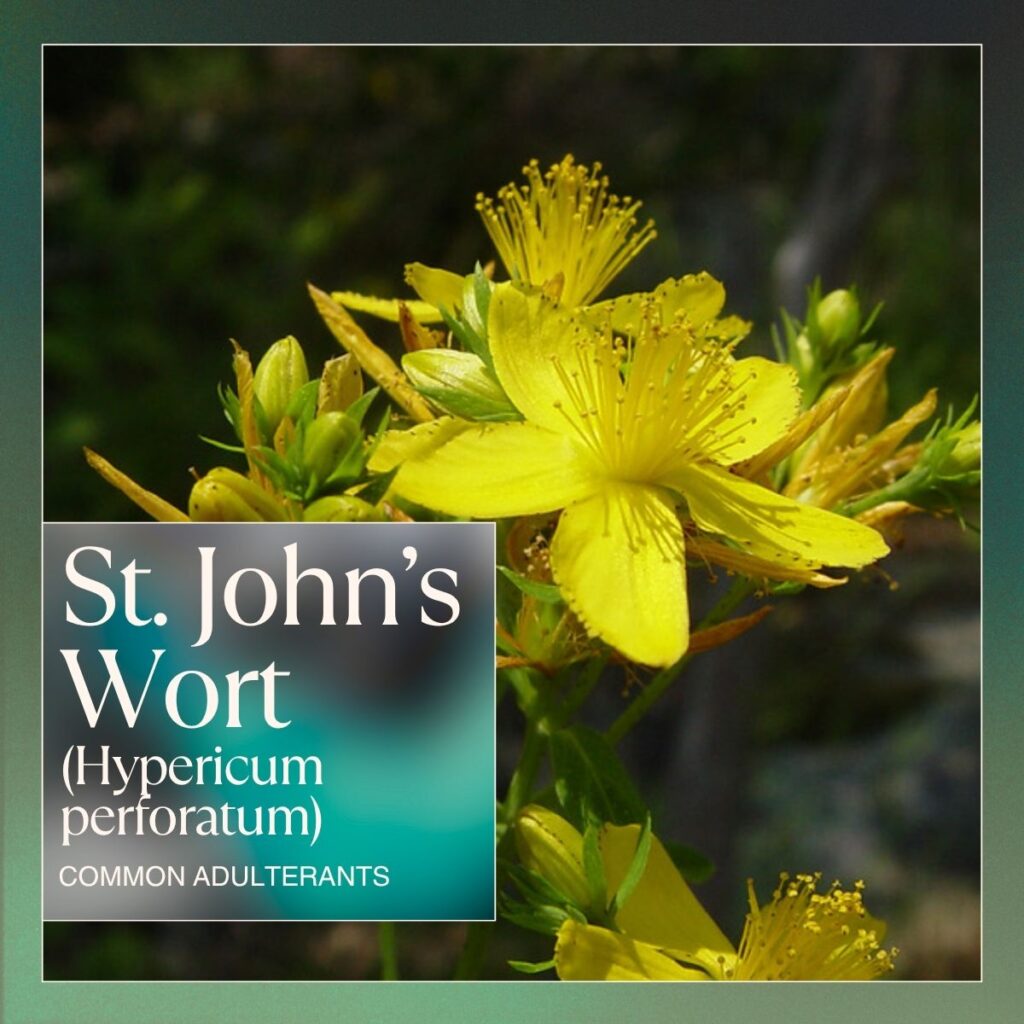
This post series on botanical ingredient adulteration is inspired by the excellent work coming out of the Botanical Adulterants Prevention Program (BAPP) by the American Botanical Council (ABC), continuing today with:
➡️ St. John’s wort (Hypericum perforatum), a flowering herb best known in herbal medicine for supporting mood, mild-to-moderate depression. Clinical trials of well-characterized European extracts found it better than placebo and about as effective as standard antidepressants for these cases. It has also been used for anxiety, restlessness, insomnia, nerve pain, general pain, and inflammation.
On the market, St. John’s wort is made from the dried flowering tops (stems, leaves, buds, flowers, and seed capsules), which are collected just before or during flowering. These are sold cut or powdered, and as water infusions (teas), oil infusions, and water-alcohol extracts. The extracts include tinctures (1:5), fluid extracts (1:1), and powdered extracts. The powdered extracts are commonly put into capsules and tablets and are often standardized to 0.3% hypericin or 2–5% hyperforin as consistency markers. Because the clinical research used specific European extracts, products that name H. perforatum and give their standardization offer more assurance than generic “St. John’s wort” labels.
For companies, confirming identity is not optional; it’s a legal and ethical duty under cGMPs to verify that each incoming botanical is the right species, the right plant part, and meets agreed quality specs. Brands and manufacturers should be leaning on resources like the BAPP adulteration bulletins and implementing fit-for-purpose analytical methods, rather than relying on nonspecific tests that can miss plant-part adulteration.
Adulteration, in the regulatory sense, means a product is unsafe or of inferior quality because it fails to meet legal standards for purity, strength, or composition (including contamination).
Economic adulteration is emphasized in these posts: intentional substitution, dilution, or undeclared additions that misrepresent a botanical’s true identity or quality compared to what the label and consumer would reasonably expect. Accidental adulteration is also present in some species.
For more detailed information on adulterants in botanicals, see the BAPP publications, which are freely available on their website. To see the full downloadable PDF post, go to:
St. John’s Wort Common Adulterants-