
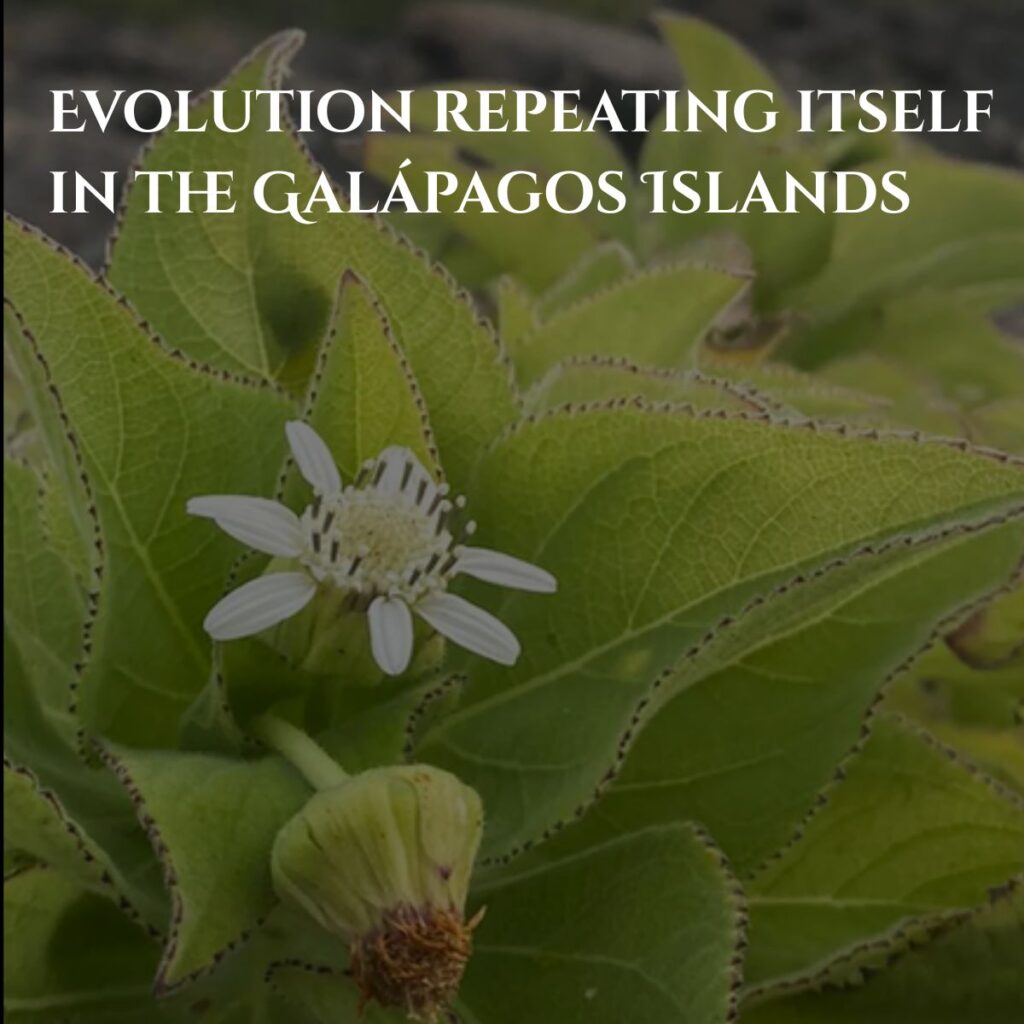
More than 150 years after Darwin’s finches reshaped biology, Galápagos plants have revealed another twist: evolution can repeat itself.
A new Nature Communications study on Scalesia (the so‑called Galápagos giant daisies) shows that different island populations have independently evolved similar growth forms and ecological roles, essentially hitting “replay” on the same adaptive solutions.
By combining genomic data with field ecology, the team found that Scalesia lineages facing comparable environments (like dry lowlands vs. humid highlands) converged on the same architectural traits again and again.
It’s not just one radiation producing a single burst of diversity; it’s multiple, parallel trajectories arriving at familiar outcomes under similar selective pressures.
➡️ For evolutionary biology, this reinforces the idea that constraint and opportunity can funnel life toward repeatable patterns.
For conservation and future crop development, it suggests that island endemics aren’t just curiosities: they’re natural experiments in resilience and adaptation we can learn from.