
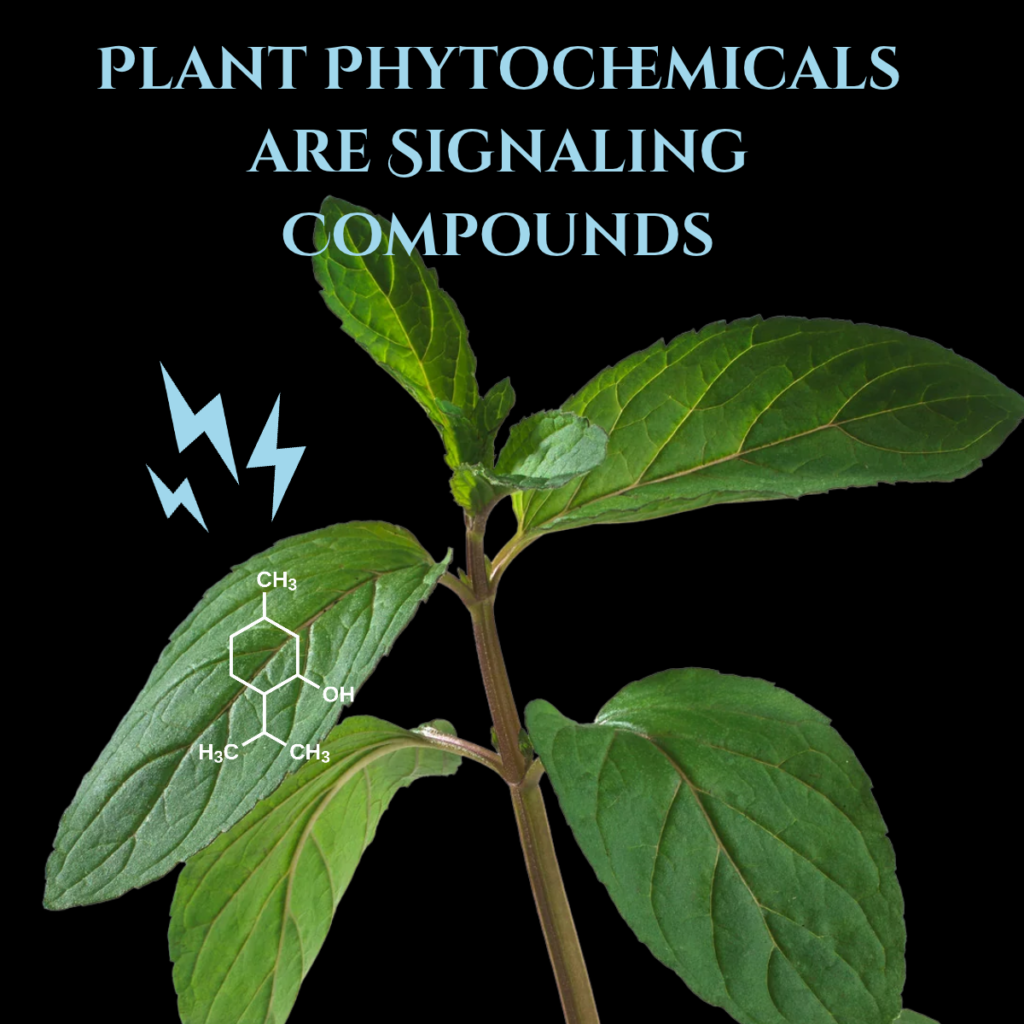
Your body doesn’t just digest plants. It detects them.
Bite into a chili pepper. Feel the cooling sensation of mint.
You are experiencing more than flavor…you are experiencing plant chemistry interacting with your sensory machinery.
Capsaicin activates a channel involved in sensing heat and burning.
Menthol activates one involved in sensing cool temperatures.
These are familiar examples of how a chemical encounter becomes a biological signal.
A plant compound does not always need to become fuel or building material to affect us.
And a receptor interaction is not necessarily the whole story:
Even with menthol and capsaicin, responses depend on concentration, temperature, and interactions among sensory pathways.
💡 That is where the idea of a chemical language becomes useful: not as a fixed dictionary in which every molecule has one meaning, but as a way of exploring how our bodies respond to plant chemistry in context.