This post series on botanical ingredient adulteration is inspired by the excellent work coming out of the Botanical Adulterants Prevention Program (BAPP) by the American Botanical Council (ABC), continuing today with:
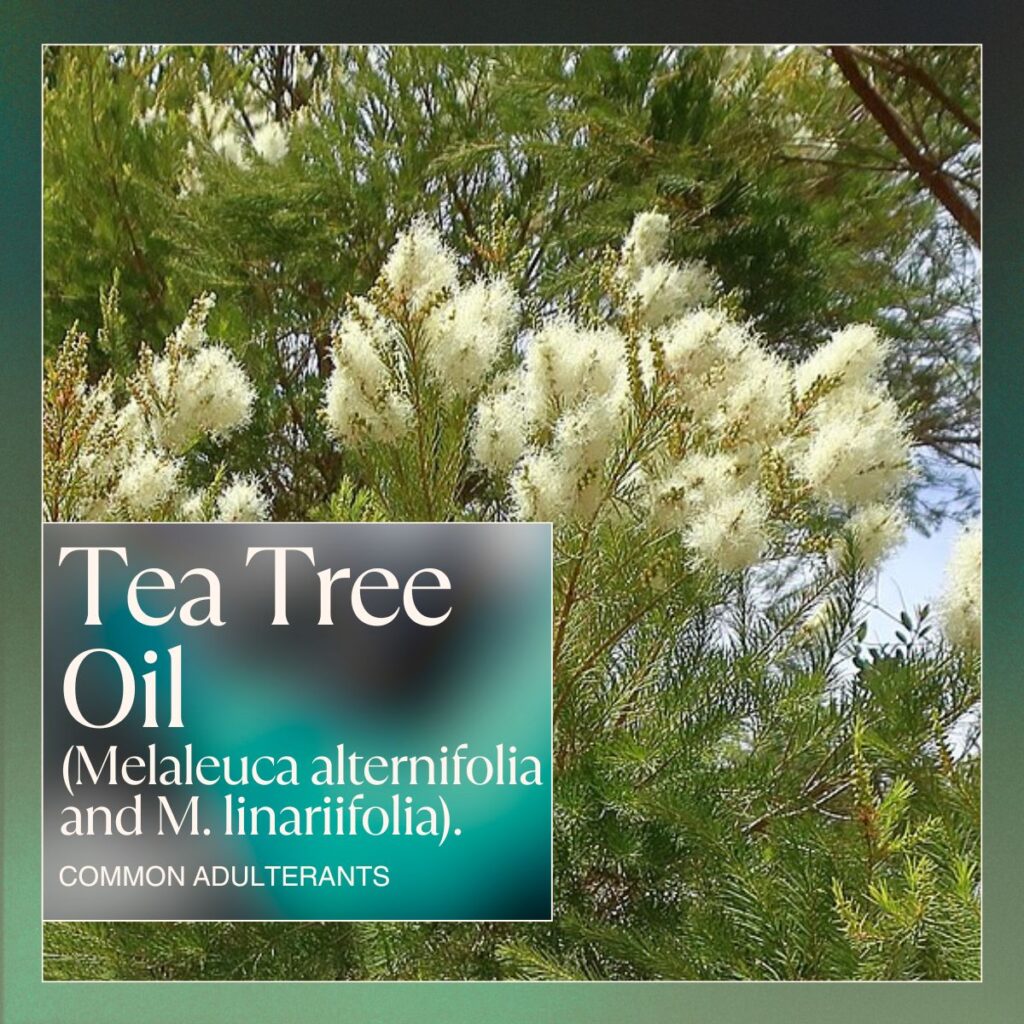
➡️ Tea tree oil , the essential oil steam-distilled from the leaves and branch tips of Melaleuca alternifolia and M. nariifolia. M. alternifolia has a long history of traditional use in Australia as a topical antiseptic, antibacterial, antifungal, anti-inflammatory, and antiviral agent. Its main modern uses are for minor cuts, burns, and scrapes, pimples, athlete’s foot, insect bites and stings, nasal and chest congestion, and fungal infections such as candidiasis.
On the market, tea tree oil is sold worldwide both as an undiluted (“neat”) essential oil and as an active ingredient in many products. These include gels, creams, lotions, shampoos, foot-care products, soaps, toothpastes, insect repellents, and air fresheners. Most commercial oil comes from plantations, mainly in Australia, though production also takes place in China, Kenya, and other countries. Kanuka and manuka oils, sometimes called “New Zealand tea tree oil,” come from different plants with different chemistry.
For companies, confirming identity is not optional; it’s a legal and ethical duty under cGMPs to verify that each incoming botanical is the right species, the right plant part, and meets agreed quality specs. Brands and manufacturers should be leaning on resources like the BAPP adulteration bulletins and implementing fit-for-purpose analytical methods, rather than relying on nonspecific tests that can miss plant-part adulteration.
Adulteration, in the regulatory sense, means a product is unsafe or of inferior quality because it fails to meet legal standards for purity, strength, or composition (including contamination).
Economic adulteration is emphasized in these posts: intentional substitution, dilution, or undeclared additions that misrepresent a botanical’s true identity or quality compared to what the label and consumer would reasonably expect. Accidental adulteration is also present in some species.
For more detailed information on adulterants in botanicals, see the BAPP publications, which are freely available on their website. See the full PDF Carousel here on LinkedIn:
Tea Tree Oil Common Adulterants-