
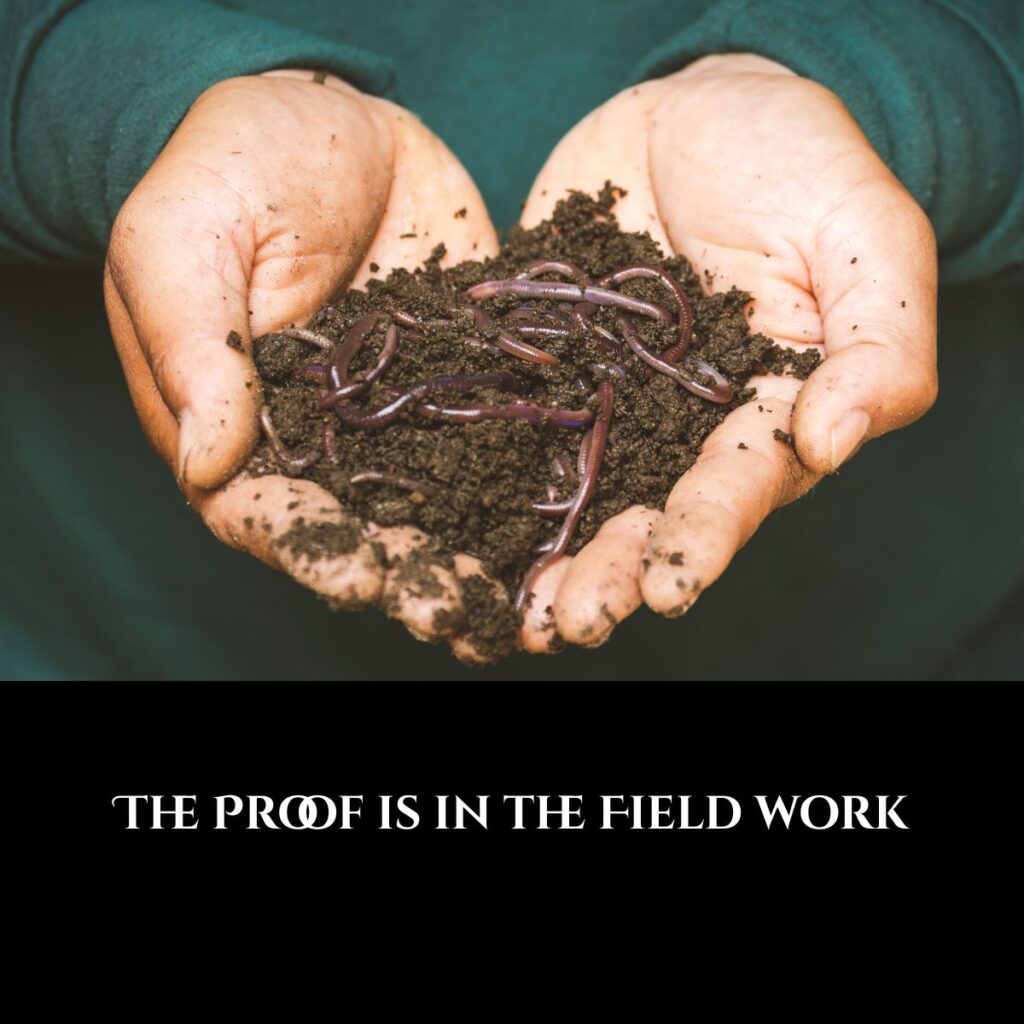
Field work on regenerative agriculture is hitting pay dirt: a multi-farm study in NC and GA found that regenerative grazing with short grazing periods, long rest, diverse forages, and organic inputs boosts key soil health indicators compared to continuous grazing or conventional row crops.
A Greener World, Rural Advancement Foundation International (RAFI) and the Soil Health Institute (SHI) partnered with farmers to understand how practices such as rotational grazing, increasing biodiversity, nutrient management, and reducing tillage are improving soil health, the foundation of regenerative agriculture.
Organic carbon, microbial activity (carbon mineralization), aggregate stability, and water-holding capacity all improved with more years under perennial and regenerative management…even in challenging, sandy Georgia soils.
➡️ The result: soils that store more water, resist erosion, cycle nutrients better, and make farms more resilient and less dependent on costly inputs.
Josh Harris, a North Carolina rancher in the study, sums up the practical takeaway: start simple…split one pasture, rotate animals back and forth, and watch the benefits become undeniable.
💡 Healthier soils have given his operation lower input costs, more drought resilience, and less day-to-day stress.
This is how regenerative agriculture is winning over farmers and the environment one by one!
Check out these useful insights in the blog post, Field Work Hits Pay Dirt. https://lnkd.in/e8Uusw-K
#regenerativeagriculture #soilhealth #certifiedregenerative