
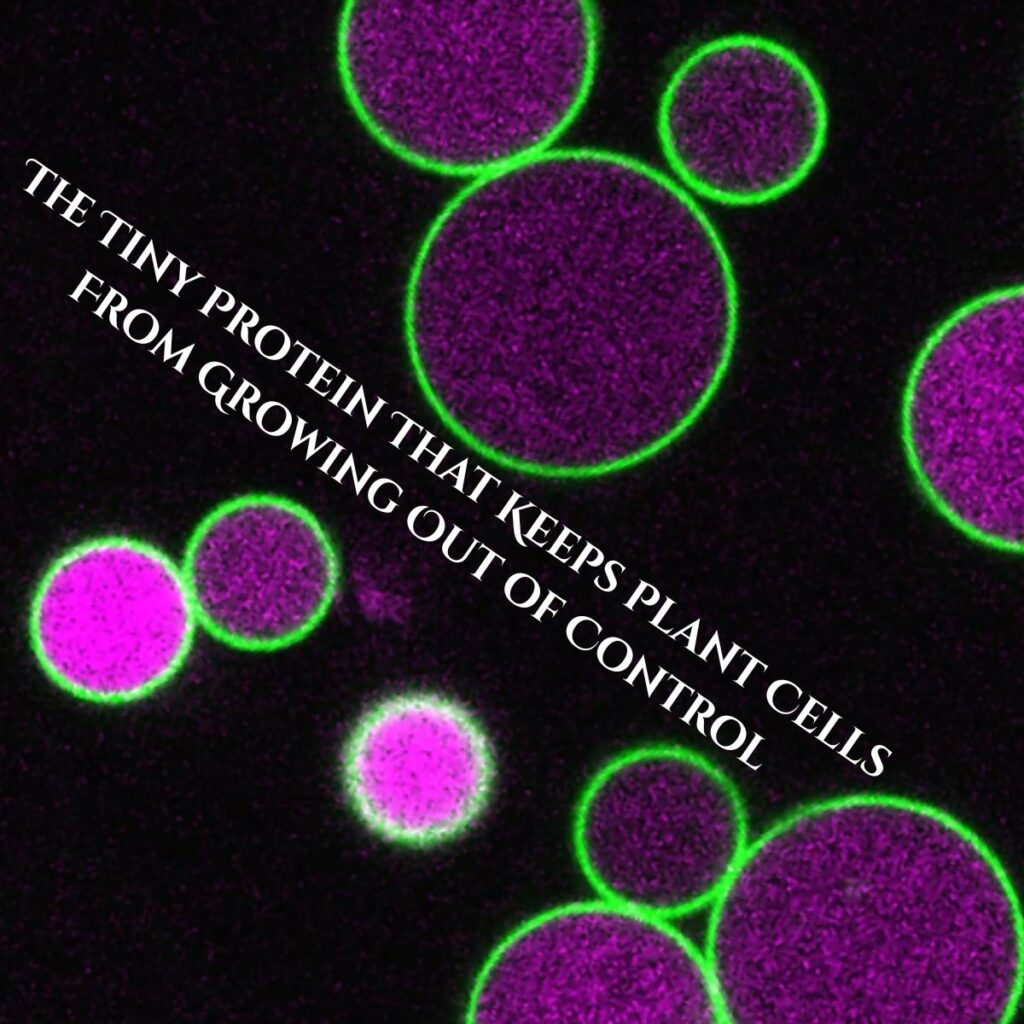
During Plant Growth, before a seedling can harvest sunlight, it runs on stored fatty acids, and on tiny cellular compartments called peroxisomes to convert those fats into usable energy.
➡️ New research shows that one small protein, PEX11, does more than help peroxisomes divide: it also helps regulate their size during early plant development.
When researchers altered the relevant genes, peroxisomes became abnormally large. The finding suggests that internal vesicles act like a built‑in braking system, helping keep these essential metabolic organelles from expanding out of control.
The more surprising part: a version of PEX11 from yeast restored the plant system, pointing to a deeply conserved cellular mechanism across very distant forms of life.
The researchers then wanted to find if this protein’s effects extend to other species besides plants. Indeed, yeast Pex11 restored normal peroxisome size in the plant cells, pointing to a deeply conserved cellular mechanism across very distant forms of life.
Reference: Nathan E. Tharp, Chelsea An, James Hwang, Nayeli S. Shad, Zachary J. Wright, Bonnie Bartel. PEX11 mediates intralumenal vesicle formation in peroxisomes. Nature Communications, 2026; 17 (1)